
One of the most common questions in metabolic research is: how long do peptides take to burn fat?
The answer is not immediate—and it’s rarely simple.
Peptides associated with fat loss are not designed as instant-action compounds. Instead, they are studied for how they influence appetite signaling, metabolic pathways, and hormonal balance over time. Because of this, understanding the timeline of fat loss peptides is essential for setting realistic expectations.
In Canada, most peptides are supplied strictly for laboratory and educational purposes only, which means timelines are typically discussed within a research context, not consumer use.
Looking for research-grade peptides with verified purity and transparent sourcing? Explore the collection at True Nova Labs
This guide breaks down how quickly fat loss peptides may begin working, what a typical research timeline looks like, and what factors influence results.
How Quickly Fat Loss Peptides Start Working
Peptides do not “burn fat” in the traditional sense. Instead, they are studied for how they influence biological processes that may indirectly affect body composition.
Some peptides may begin interacting with:
- appetite signaling pathways
- satiety regulation
- glucose-related pathways
within a relatively short time frame. However, observable changes in body composition typically take longer.
Early-stage research observations may involve:
- changes in hunger perception
- shifts in appetite behavior
- alterations in energy intake
These initial effects may appear sooner than visible changes in fat loss.
👉 Explore research-grade metabolic peptides designed for laboratory use
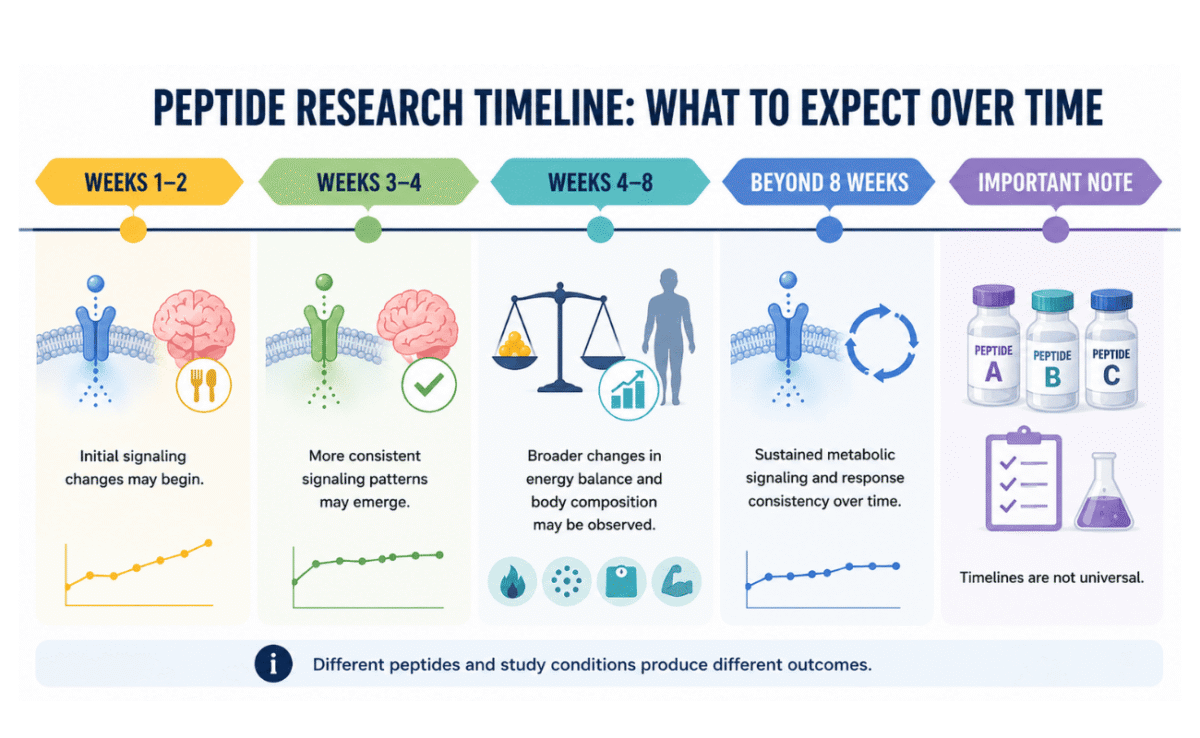
Week-by-Week Fat Loss Timeline
While timelines vary significantly depending on the peptide and research conditions, a general pattern is often discussed in metabolic studies.
Weeks 1–2
Initial signaling changes may begin. Researchers may observe early appetite-related responses or subtle metabolic shifts, depending on the peptide being studied.
Weeks 3–4
More consistent signaling patterns may emerge. Appetite regulation and satiety-related pathways may show more stable activity.
Weeks 4–8
This is where longer-term metabolic effects are more commonly evaluated. Studies may begin to observe broader changes in energy balance and body composition models.
Beyond 8 Weeks
Long-term studies often focus on sustained metabolic signaling, adaptation, and consistency of response over time.
Important note: Timelines are not universal. Different peptides and study conditions produce different outcomes.
Factors That Affect Results
The timeline for fat loss peptides depends on several key variables.
Peptide type plays a major role, as different compounds target different biological pathways. For example, peptides interacting with GLP-1 or GIP receptors may produce different signaling timelines compared to those targeting other systems.
Purity is another critical factor. Higher-quality peptides with verified testing tend to produce more consistent and reliable research outcomes.
Storage and handling also matter. Improper conditions may lead to degradation, reducing the effectiveness of the peptide being studied.
Biological variability must also be considered. Metabolic signaling differs across systems, meaning results are rarely identical even under controlled conditions.
Signs Peptides May Be Working
In research settings, early indicators are not always visual.
Instead, researchers often look for:
- changes in appetite signaling
- altered satiety patterns
- shifts in energy intake behavior
- metabolic pathway responses
These signals may appear before any observable changes in body composition.
Because peptides influence internal biological systems first, visible results often lag behind initial signaling changes.
Why Some People See Faster Results
Variability in response is one of the most important aspects of peptide research.
Some systems may respond more quickly due to:
- differences in metabolic activity
- variations in signaling sensitivity
- differences in study conditions
- peptide-specific mechanisms
Peptides that interact with multiple pathways—such as GLP-1, GIP, and glucagon-related systems—may show broader effects, but not necessarily faster ones.
This is why comparing timelines across different peptides can be misleading.
Realistic Expectations for Fat Loss
One of the biggest misconceptions is expecting rapid fat loss from peptides alone.
In reality, metabolic research emphasizes:
- gradual biological adaptation
- consistent signaling changes
- long-term pathway interaction
Peptides are not typically studied as standalone solutions. Instead, they are evaluated as part of a broader system involving:
- energy balance
- metabolic regulation
- hormonal signaling
Understanding this helps set realistic expectations and prevents misinterpretation of early-stage observations.
Explore research peptides supported by transparent quality standards at True Nova Labs

Curious about how peptides may support fat loss and appetite control? Discover the science, research insights, and key considerations in Peptides for Fat Loss: How They Work, Research Insights & Key Considerations from True Nova Labs
FAQ
How long do fat loss peptides take to work?
Initial signaling changes may occur within days to weeks, but observable body composition changes typically require several weeks of consistent study.
Do peptides burn fat immediately?
No. Most peptides are studied for how they influence appetite, metabolism, and hormonal pathways over time.
Why do some peptides seem to work faster than others?
Different peptides target different biological pathways, which affects how quickly responses may be observed.
What is the most important factor in peptide results?
Peptide type, purity, handling, and research conditions all play a major role in determining outcomes.
Are fat loss peptides approved in Canada?
Most research peptides are labeled “for research use only” and are not approved therapeutic products. Regulatory oversight is managed by Health Canada.
Conclusion
Understanding the timeline of how fat loss peptides work requires patience and scientific context.
Rather than focusing on immediate results, research emphasizes:
- signaling pathways
- metabolic adaptation
- long-term biological responses
Different peptides work at different speeds, and results depend heavily on quality, handling, and study design.
For researchers in Canada, combining realistic expectations with proper sourcing and scientific understanding is essential for reliable outcomes.
Explore Research-Grade Peptides
Looking for research peptides supported by transparent sourcing, verified purity, and consistent quality standards?
Explore the full collection here SHOP ALL COMPOUNDS
Disclaimer:
This content is provided by True Nova Labs for educational and research purposes only. It is not intended to diagnose, treat, cure, or prevent any disease, nor to provide medical or legal advice.




3 Comments
Kevin Marshall
Really appreciate how realistic this article was compared to a lot of content online about fat loss peptides. Most people expect instant results, but I liked that the timeline here focused on consistency, metabolism, and overall lifestyle factors. The explanation felt much more trustworthy because it didn’t overpromise. Do you think combining peptides with specific nutrition strategies can noticeably speed up results over time?
Lauren Mitchell
This was one of the clearest explanations I’ve seen regarding realistic fat loss timelines. I liked how the article balanced scientific information with practical expectations because many readers get confused by exaggerated claims on social media. The discussion around patience and sustainable progress was especially valuable. It would be interesting to know whether age or training experience significantly changes how quickly people respond to peptides.
Brandon Ellis
Excellent article with a very grounded perspective on peptide-assisted fat loss. I appreciated that the content focused on long-term results and proper expectations instead of quick fixes. The timeline examples helped make the information feel more practical and relatable for readers. Have you considered writing another article about the most common mistakes people make when starting peptide protocols for fat loss?