
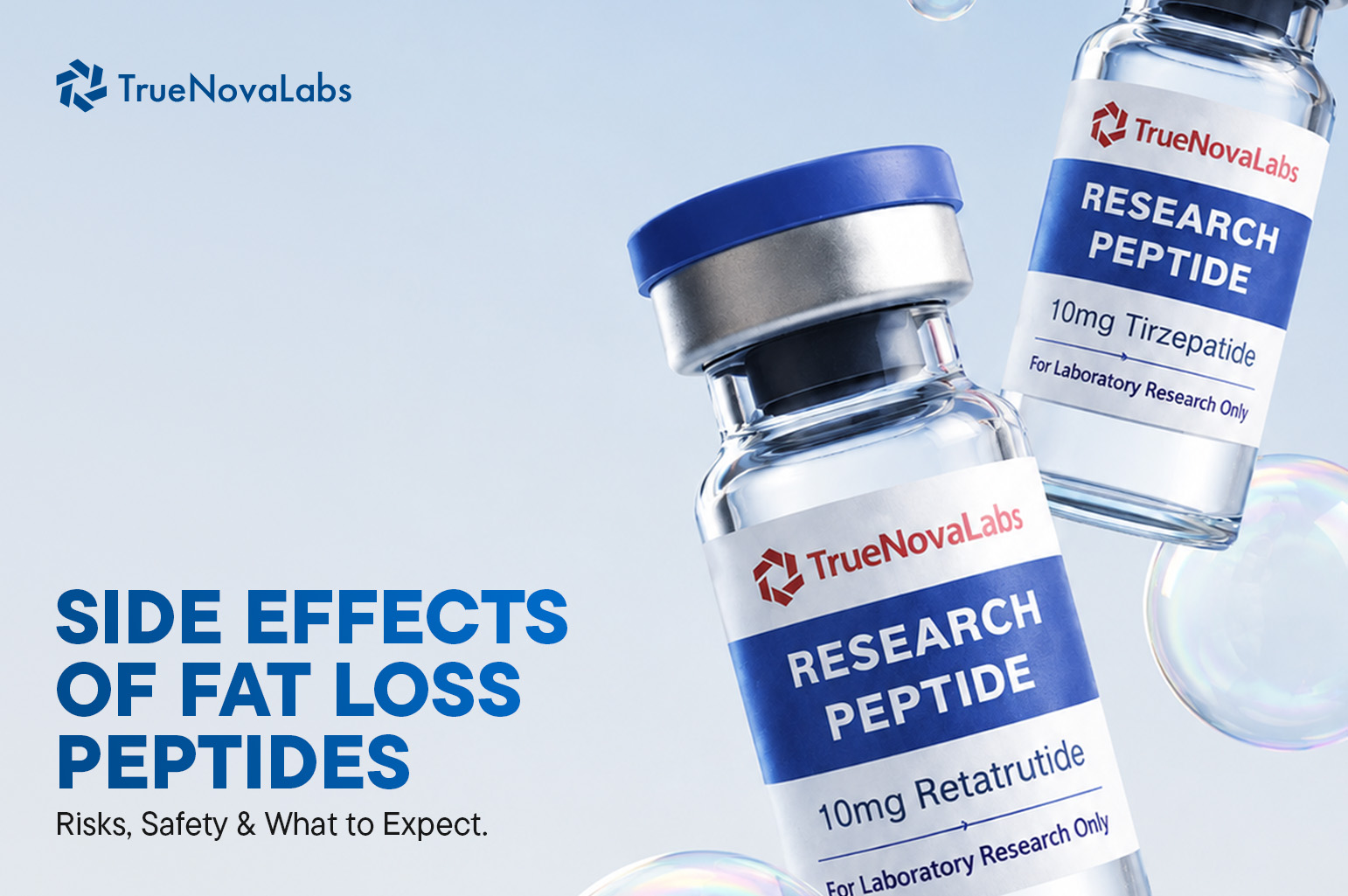
As interest in metabolic research continues to grow, more attention is being placed on the side effects of fat loss peptides and how these compounds interact with complex biological systems.
While many peptides are studied for their role in appetite regulation, metabolic signaling, and energy balance, they are still biologically active compounds. This means that, like any compound interacting with hormonal and metabolic pathways, they may also be associated with unintended responses depending on multiple factors.
In Canada, most peptides are supplied strictly for laboratory and educational purposes only, not as approved therapeutic products. Understanding potential risks and limitations is essential when evaluating peptide research.
Looking for research-grade peptides with verified purity and transparent sourcing? Explore the collection here: SHOP ALL COMPOUNDS
This guide explains what current research suggests about side effects, how risks vary between peptide types, and what factors may influence safety.
Are Fat Loss Peptides Safe?
The question of safety is not absolute. Fat loss peptides vary widely in how they interact with biological systems, which means their safety profile depends heavily on context.
Peptide safety is influenced by:
- the specific peptide being studied
- purity and quality
- dosage and study design
- storage and handling
- biological variability
Some peptides are studied in relation to appetite and metabolic pathways, while others interact with broader endocrine systems. Because of this, side effects cannot be generalized across all peptides.
It is also important to distinguish between:
- research peptides
- approved pharmaceutical compounds
In Canada, regulatory oversight from Health Canada applies depending on classification and intended use.

Most Common Side Effects Reported
In research discussions, certain observations are commonly associated with peptides that influence metabolic and appetite-related pathways.
These may include:
- changes in appetite or satiety
- digestive-related responses
- temporary fatigue or energy fluctuations
- mild fluid retention in some models
These effects are often linked to how peptides interact with:
- GLP-1 signaling
- GIP pathways
- insulin-related systems
- appetite regulation mechanisms
It is important to note that these observations vary depending on:
- the peptide compound
- study duration
- concentration
- experimental conditions
In many cases, early responses reflect biological adjustment rather than long-term outcomes.
👉 Explore research-grade metabolic peptides designed for laboratory use
Serious Risks and Warning Signs
Although most discussions focus on mild or moderate observations, there are also potential risks that researchers should be aware of—especially when quality control is compromised.
Serious concerns are more likely to arise from:
- low-purity peptides
- contamination
- improper storage
- incorrect handling
- unreliable suppliers
In such cases, risks may include:
- unpredictable biological responses
- inconsistent signaling outcomes
- degradation-related effects
Because peptides are sensitive molecules, even small impurities or environmental exposure can alter how they behave.
This is why sourcing matters. Explore high-quality research peptides with verified testing at: SHOP ALL COMPOUNDS

Differences Between Various Fat Loss Peptides
Not all fat loss peptides behave the same way. Some compounds primarily interact with appetite-related pathways, while others influence broader metabolic or endocrine systems.
For example:
- GLP-1 related peptides are commonly associated with satiety signaling
- dual or multi-pathway peptides may influence multiple metabolic systems
- amylin-related peptides are studied for appetite and fullness perception
Because of these differences, side effect profiles may vary significantly between peptides. This is why comparing peptides directly without understanding their mechanisms can be misleading.
How to Reduce Potential Side Effects
Reducing risk in peptide research is largely about control and consistency.
Working with high-purity peptides supported by transparent testing helps reduce the likelihood of unwanted variables. Proper storage conditions—such as stable temperature and minimal light exposure—help maintain peptide stability.
Careful handling during reconstitution also plays an important role. Contamination or improper preparation can introduce variability that affects research outcomes.
Most importantly, understanding the specific peptide being studied allows researchers to set realistic expectations and interpret observations more accurately.
When to Stop Using Peptides
In research contexts, discontinuation decisions are typically based on:
- unexpected or inconsistent results
- instability in peptide behavior
- contamination concerns
- deviation from expected study outcomes
Because peptides are studied within controlled environments, changes in response patterns may indicate underlying issues with:
- quality
- handling
- study conditions
Stopping and reassessing the research setup is often more important than continuing with uncertain variables.
Curious about how peptides may support fat loss and appetite control? Discover the science, research insights, and key considerations in Peptides for Fat Loss: How They Work, Research Insights & Key Considerations from True Nova Labs
FAQ
Do fat loss peptides have side effects?
They may be associated with certain biological responses depending on the peptide type, quality, and research conditions.
Are all fat loss peptides the same?
No. Different peptides interact with different pathways, which means their effects and potential risks can vary significantly.
What causes most peptide-related risks?
Common factors include low purity, contamination, improper storage, and lack of supplier transparency.
Are fat loss peptides approved in Canada?
Many research peptides are labeled “for research use only” and are not approved therapeutic products.
How can risks be reduced?
By using verified suppliers, ensuring proper storage and handling, and maintaining controlled research conditions.
Conclusion
Understanding the side effects of fat loss peptides requires more than surface-level information.
These compounds interact with complex biological systems, and their effects depend heavily on:
- purity
- handling
- study design
- biological pathways
Rather than viewing peptides as simple solutions, modern research focuses on how they influence metabolic signaling over time.
For researchers in Canada, maintaining high standards in sourcing, storage, and study design is essential for achieving reliable and meaningful results.
Explore Research-Grade Peptides
Looking for research peptides supported by transparent sourcing, verified purity, and consistent quality standards?
Explore the full collection here: SHOP ALL COMPOUNDS
Disclaimer:
This content is provided by True Nova Labs for educational and research purposes only. It is not intended to diagnose, treat, cure, or prevent any disease, nor to provide medical or legal advice.




3 Comments
Eric Thompson
Very balanced and informative article. I appreciate that the post discussed both the potential benefits and the possible side effects of fat loss peptides instead of only focusing on results. The section about realistic expectations and safety considerations was especially valuable because many people overlook those factors. Do you think better education around peptide usage could reduce the number of misuse cases people see online?
Ashley Morgan
Excellent read with a very responsible approach to the topic. A lot of content online tends to exaggerate fat loss solutions, so it was refreshing to see an article that openly addressed risks, side effects, and what users should realistically expect. I also liked how the information was explained in a clear and non-alarmist way. It would be interesting to see more research about how lifestyle habits influence the severity of side effects over time.
Jason Miller
This article did a great job presenting a more realistic perspective on fat loss peptides. I liked that it emphasized monitoring, safety, and informed decision-making instead of promoting quick-fix solutions. The breakdown of common side effects was especially helpful for readers trying to understand the topic more responsibly. Have researchers identified whether certain peptides tend to have more manageable side effect profiles than others?