
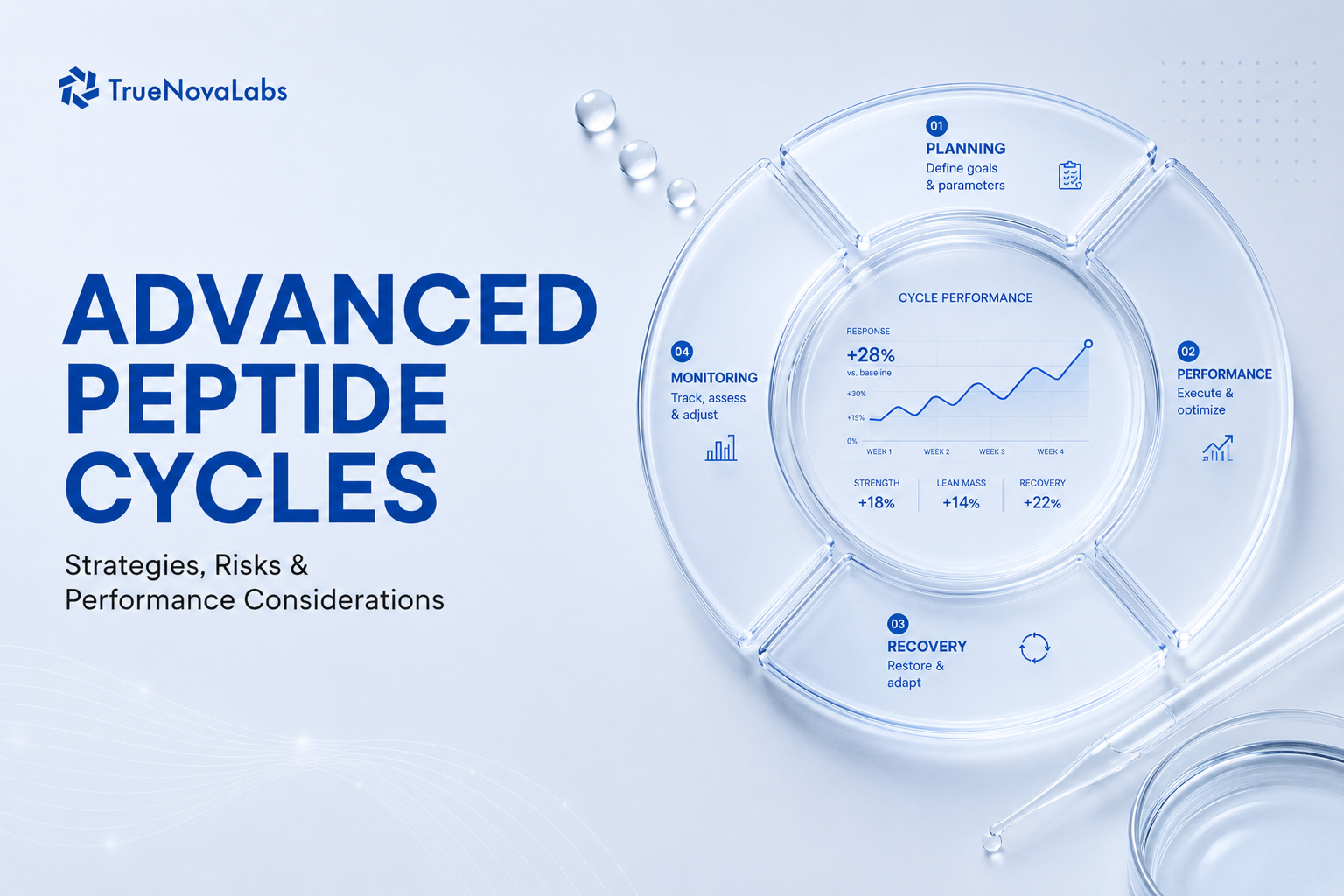
Advanced peptide cycles are often discussed in performance, recovery, body composition, and metabolic research. However, the term “advanced” should not be understood as simply using more peptides, combining multiple compounds, or extending research timelines. In a responsible research context, an advanced peptide cycle refers to a structured framework for studying peptide mechanisms, interaction patterns, recovery demands, and risk factors with greater precision.
Peptides are biologically active signaling molecules. Some influence growth hormone pathways, tissue repair models, appetite regulation, inflammation signaling, sleep-related recovery, or metabolic function. Because these systems overlap, advanced peptide research requires careful attention to compound selection, receptor activity, study design, biomarkers, safety limitations, and ethical boundaries.
This article explores advanced peptide cycles from an educational and research-focused perspective. It does not provide dosing instructions, self-use guidance, or personalized protocols. Peptides should be studied or handled only within appropriate research, regulatory, and professional frameworks.
What Defines an Advanced Peptide Cycle?
An advanced peptide cycle is typically defined by the complexity of the research objective, not by the number of compounds involved.
A basic peptide cycle may focus on one compound and one primary outcome, such as recovery markers, appetite signaling, or body composition models. An advanced cycle, by contrast, often involves more variables, such as multiple biological pathways, longer observation periods, combination research, or more detailed monitoring.
In research-focused terms, advanced peptide cycles may include:
- Multiple peptide classes being studied together
- A specific goal such as bulking, cutting, recomposition, or recovery
- More attention to timing, adaptation, and recovery windows
- Biomarker tracking before, during, and after the research period
- Evaluation of side effects, receptor sensitivity, and endocrine feedback
- Stronger emphasis on sourcing, purity, storage, and documentation
The key difference is that advanced peptide cycling requires a deeper understanding of mechanism and consequence. Peptides do not act in isolation. A compound that affects growth hormone signaling may also influence glucose metabolism, water retention, appetite, sleep quality, or recovery perception. A peptide involved in appetite regulation may also influence gastrointestinal function, endocrine feedback, or energy intake patterns.
This is why advanced peptide research should be approached as a system-level topic rather than a simple performance shortcut.
👉 Learn more about performance and recovery peptides at SHOP ALL COMPOUNDS

Popular Peptides Used in Advanced Cycles
Different peptides are studied for different mechanisms. In advanced peptide cycle discussions, compounds are often grouped by their primary research category rather than treated as interchangeable.
1. Growth Hormone Secretagogue Peptides
Growth hormone secretagogues are studied for their ability to stimulate growth hormone release through pathways such as the ghrelin receptor or growth hormone secretagogue receptor. Examples often discussed in research communities include ipamorelin, CJC-1295, GHRP-2, and GHRP-6.
These peptides are commonly associated with research into:
- Recovery signaling
- Lean mass models
- Sleep and recovery patterns
- Tissue repair pathways
- Body composition changes
However, this category also requires caution. Growth hormone-related pathways can influence insulin sensitivity, fluid balance, appetite, and endocrine feedback. Clinical literature on growth hormone secretagogues has noted possible effects on glucose markers and insulin resistance in some contexts.
2. Tissue Repair and Recovery Peptides
Peptides such as BPC-157, TB-500, and related compounds are frequently discussed in tissue repair research. They are often associated with models involving soft tissue, tendon, ligament, muscle recovery, inflammation response, and wound-healing pathways.
From a scientific perspective, these peptides are interesting because they are often studied in relation to:
- Angiogenesis models
- Collagen signaling
- Inflammatory response
- Tissue remodeling
- Recovery after mechanical stress
However, many recovery peptides lack large-scale human clinical evidence for performance or injury-repair claims. This means content should avoid presenting them as proven treatments or guaranteed recovery tools.
3. Metabolic and Fat-Loss Research Peptides
Metabolic peptides are studied for their role in appetite regulation, glucose signaling, insulin response, or energy balance. This category may include GLP-1-related compounds, amylin analogues, and other metabolic research peptides.
These compounds are often discussed in relation to:
- Appetite signaling
- Food intake regulation
- Insulin and glucagon pathways
- Body-weight models
- Metabolic adaptation
Because metabolic peptides can influence endocrine and gastrointestinal systems, they require careful research framing. Regulatory agencies have warned about unapproved peptide and GLP-1 products being sold online with misleading claims.
4. Sleep and Recovery Peptides
Some peptides are studied for their relationship to sleep architecture, stress response, and recovery quality. DSIP, for example, is often discussed in sleep-related research, though human evidence remains limited and should be interpreted cautiously.
This category is relevant because sleep influences:
- Hormone regulation
- Muscle repair
- Glucose metabolism
- Nervous system recovery
- Training adaptation
For advanced users or researchers, sleep-related peptides should not be viewed as a replacement for foundational recovery practices such as proper sleep hygiene, nutrition, training management, and stress reduction.
5. Skin, Aging, and Regeneration Peptides
Peptides such as GHK-Cu are studied for skin health, collagen signaling, wound-healing models, and tissue regeneration pathways. They are often included in broader longevity or recovery discussions.
The FDA has noted safety concerns for certain compounded peptide substances, including risks related to immunogenicity, aggregation, impurities, and limited human safety data for some proposed routes of administration.
This highlights an important point: even peptides that sound “wellness-focused” can raise meaningful safety and quality-control concerns.
👉 Learn more about performance and recovery peptides at SHOP ALL COMPOUNDS

Bulking, Cutting & Recomposition Approaches
Advanced peptide cycles are often discussed around three major performance or body-composition goals: bulking, cutting, and recomposition. Each goal involves different biological priorities.
Bulking-Focused Research
Bulking is generally associated with increasing lean mass, training output, nutrient intake, and recovery capacity. In peptide research discussions, bulking-focused strategies often examine compounds connected to growth hormone signaling, appetite, tissue repair, and sleep recovery.
The main research interest is not simply “more muscle.” A more accurate focus includes:
- Recovery between high-volume sessions
- Protein synthesis environment
- Connective tissue tolerance
- Sleep quality and endocrine rhythm
- Nutrient partitioning and body composition
A common mistake is assuming that peptides can compensate for poor training structure or inadequate nutrition. In reality, any body-composition model depends heavily on energy intake, progressive overload, recovery, and consistency.
Cutting-Focused Research
Cutting refers to reducing body fat while trying to preserve lean mass and performance. Peptide research in this area often focuses on appetite regulation, metabolic signaling, recovery under calorie restriction, and fatigue management.
Cutting creates stress on the body. Calorie restriction can affect:
- Training intensity
- Sleep quality
- Mood and motivation
- Thyroid-related adaptation
- Sex hormone balance
- Recovery speed
Advanced peptide research must consider these stressors. A cutting-oriented peptide model should not be framed as a shortcut around nutrition, training, or safe body-weight management.
Recomposition-Focused Research
Recomposition refers to the attempt to reduce fat mass while maintaining or increasing lean mass. This is often the most complex goal because it requires balancing energy intake, training stimulus, recovery, and metabolic adaptation.
In research discussions, recomposition may involve peptides studied for:
- Recovery support
- Appetite regulation
- Lean mass preservation
- Sleep and stress response
- Glucose and insulin-related signaling
Recomposition models are highly context-dependent. Training history, baseline body fat, protein intake, sleep quality, and metabolic health all influence outcomes.
Recovery and Cycle Management
Recovery is one of the most overlooked parts of advanced peptide cycles. Many discussions focus on compound selection, but advanced research design should also examine what happens before, during, and after the cycle.
Pre-Cycle Considerations
Before any advanced peptide research model, the most important step is establishing baseline data. This may include:
- Body composition markers
- Training performance indicators
- Sleep quality
- Resting heart rate
- Blood pressure
- Glucose and insulin-related markers
- Liver and kidney function markers
- Inflammatory markers
- Hormone-related biomarkers
Without baseline data, it becomes difficult to determine whether changes are related to the peptide, training, diet, stress, sleep, or other variables.
During-Cycle Monitoring
During an advanced cycle, monitoring should focus on both intended and unintended effects. Important areas include:
- Appetite changes
- Water retention
- Energy levels
- Sleep disruption
- Injection-site reactions in research settings
- Mood changes
- Glucose regulation
- Blood pressure
- Recovery perception
- Training tolerance
Advanced cycle management is not about pushing longer or stronger. It is about identifying whether the research model remains stable, measurable, and safe.
Post-Cycle Review
After a research cycle, the post-cycle phase is used to evaluate outcomes, recovery, and any lingering effects. This may involve reviewing:
- Whether the original goal was met
- Which markers changed
- Whether side effects appeared
- Whether recovery returned to baseline
- Whether the peptide produced meaningful data
- Whether future research should be adjusted or discontinued
This post-cycle review is essential because peptide effects may involve delayed adaptation, endocrine feedback, or changes that only become obvious after the cycle ends.
Risks, Side Effects & Common Mistakes
Advanced peptide cycles can carry significant risks, especially when compounds are used without professional oversight, proper sourcing, or clear research boundaries.
Potential Risks and Side Effects
Risks vary depending on the peptide class, quality, route, and research context. Common concerns include:
- Hormonal disruption
- Insulin sensitivity changes
- Water retention
- Appetite changes
- Fatigue or sleep disruption
- Gastrointestinal side effects
- Injection-site irritation
- Immune reactions
- Contamination or impurity exposure
- Unknown long-term safety profile
The FDA has specifically raised concerns about some peptide substances used in compounding, including limited human safety data and risks related to impurities, aggregation, and immunogenicity.
Common Mistake 1: Treating Peptides as Harmless
Because peptides are often described as “natural signaling molecules,” some users assume they are automatically safe. This is misleading. Peptides can interact with powerful endocrine, metabolic, immune, and nervous system pathways.
Common Mistake 2: Combining Too Many Compounds
Advanced does not mean excessive. Combining multiple peptides can make it harder to identify what is causing benefits, side effects, or biomarker changes. It also increases uncertainty around interactions.
Common Mistake 3: Ignoring Bloodwork and Biomarkers
Subjective feelings are not enough. Energy, sleep, and performance can be influenced by many factors. Biomarker tracking helps create a more accurate picture of how the body is responding.
Common Mistake 4: Poor Product Quality Control
Peptide quality matters. Purity, identity testing, sterility, storage, and documentation all influence research reliability. Unverified products can create risks due to contamination, incorrect concentration, degradation, or mislabeling.
Common Mistake 5: Confusing Research Interest With Approval
A peptide being popular in online communities does not mean it is clinically approved, legally available for human use, or supported by strong human evidence. Research interest and medical approval are not the same thing.
Common Mistake 6: Ignoring Sport Regulations
Athletes should be especially cautious. WADA’s 2026 Prohibited List includes peptide hormones, growth factors, related substances, and mimetics under prohibited categories.
For competitive athletes, accidental use can still result in sanctions. Even products obtained through wellness clinics or supplement channels may contain prohibited ingredients.
Long-Term Considerations for Advanced Users
Advanced peptide cycles should always be evaluated through a long-term lens. Short-term changes in body composition, recovery, or performance do not automatically mean the approach is sustainable or safe.
Endocrine Feedback
Peptides that influence growth hormone, appetite, insulin, or metabolic pathways may affect broader endocrine balance. Long-term or repeated exposure can make it difficult to separate desired effects from compensatory adaptation.
Insulin Sensitivity and Glucose Control
Some peptide categories may influence glucose metabolism. This is especially important for individuals with insulin resistance, diabetes risk, or metabolic syndrome. Research involving growth hormone-related pathways should consider glucose and insulin markers carefully.
Receptor Sensitivity
Repeated stimulation of a pathway may affect receptor responsiveness. This is one reason advanced cycle design must consider breaks, observation periods, and response tracking rather than assuming continuous exposure is better.
Cardiovascular and Fluid Balance
Some compounds connected to growth hormone or metabolic signaling may influence fluid retention, blood pressure, or cardiovascular workload. These risks may be more relevant when peptides are combined with intense training, calorie manipulation, stimulants, or other performance substances.
Evidence Quality
Not all peptides have the same level of evidence. Some are supported by clinical studies in specific contexts. Others are primarily discussed through animal studies, early-stage research, mechanistic data, or online anecdote.
Advanced users should distinguish between:
- Approved therapeutic peptides
- Clinical-stage investigational peptides
- Preclinical research compounds
- Online “research-use” products
- Unverified performance-enhancement claims
Legal and Regulatory Status
Peptide legality depends on country, formulation, route, labeling, intended use, and regulatory classification. For research suppliers, clear labeling, documentation, and compliance are essential. For consumers, unapproved peptide use can involve legal and health risks.
Read Peptides for Bodybuilding: Muscle Growth, Recovery & Performance Explained to learn more about muscle growth, recovery, performance potential, and safety considerations.
FAQ – Advanced Peptide Cycles
What are advanced peptide cycles?
Advanced peptide cycles refer to more complex peptide research frameworks involving specific goals, multiple variables, detailed monitoring, and deeper understanding of peptide mechanisms. They should not be reduced to simply combining more compounds or extending cycle length.
Are advanced peptide cycles used for bulking?
In performance discussions, some peptides are studied in relation to recovery, lean mass models, appetite, and training adaptation. However, peptides should not be presented as guaranteed muscle-building tools or substitutes for training, nutrition, and recovery.
Are peptides used for cutting?
Some peptides are studied for appetite regulation, metabolic signaling, and body-composition models. However, cutting outcomes still depend heavily on calorie control, protein intake, training, sleep, and metabolic health.
What peptides are commonly discussed in advanced cycles?
Common categories include growth hormone secretagogues, recovery peptides, metabolic peptides, sleep-related peptides, and skin or regeneration peptides. Examples often discussed include CJC-1295, ipamorelin, BPC-157, TB-500, GHK-Cu, DSIP, and GLP-1-related compounds.
What are the biggest risks of advanced peptide cycles?
Major risks include hormonal disruption, insulin sensitivity changes, water retention, immune reactions, product contamination, poor quality control, unknown long-term safety, and regulatory issues.
Do advanced peptide cycles require bloodwork?
In a responsible research or clinical context, baseline and follow-up biomarkers are important. Without data, it is difficult to evaluate safety, effectiveness, or unintended changes.
Are peptides allowed in competitive sports?
Many peptide hormones, growth factors, related substances, and mimetics are prohibited under anti-doping rules. Competitive athletes should check current sport regulations before considering any peptide-related product.
Are research peptides the same as approved medicines?
No. Research peptides, investigational compounds, compounded substances, and approved medicines are different categories. A peptide being studied does not mean it is approved or safe for general use.
What is the most common mistake advanced users make?
One common mistake is treating peptides as low-risk because they are biologically based. In reality, peptides can affect powerful signaling systems and should be approached with caution, documentation, and professional oversight.
How should advanced peptide research be approached?
Advanced peptide research should begin with a clear objective, evidence review, quality-control standards, baseline data, risk assessment, and responsible monitoring. It should avoid unsupported claims, excessive combinations, and casual self-experimentation.
Final Thoughts
Advanced peptide cycles require more than interest in performance or body composition. They require an understanding of peptide mechanisms, endocrine feedback, recovery demands, safety risks, and long-term consequences.
The most responsible approach is to treat advanced peptide cycling as a research and education topic, not a shortcut or casual enhancement strategy. Peptides can influence powerful biological systems, and the quality of the evidence varies widely between compounds.
For more research-focused peptide education, explore additional resources from True Nova Labs
Disclaimer:
This content is provided by True Nova Labs for educational and research purposes only. It is not intended to diagnose, treat, cure, or prevent any disease, nor to provide medical or legal advice.



3 Comments
Garrett Nelson
Really interesting article on advanced peptide cycles and the importance of understanding biological adaptation over time. I liked that the article emphasized cycle structure, recovery phases, and signaling pathways instead of focusing only on potential outcomes. The discussion around balancing stimulation and recovery was especially insightful.
Vanessa Coleman
Great read overall. A lot of discussions online make peptide cycles seem much simpler than they actually are, so I appreciated the explanation about feedback loops, rest periods, and long-term adaptation. It definitely helped provide a more research-based perspective on the topic.
Trevor Hughes
Very well structured and easy to follow. I especially liked how the article explained that different peptides may serve different purposes within a cycle, whether related to growth hormone signaling, recovery, or tissue repair. It would be interesting to see a future post comparing beginner and advanced cycle structures side by side.