
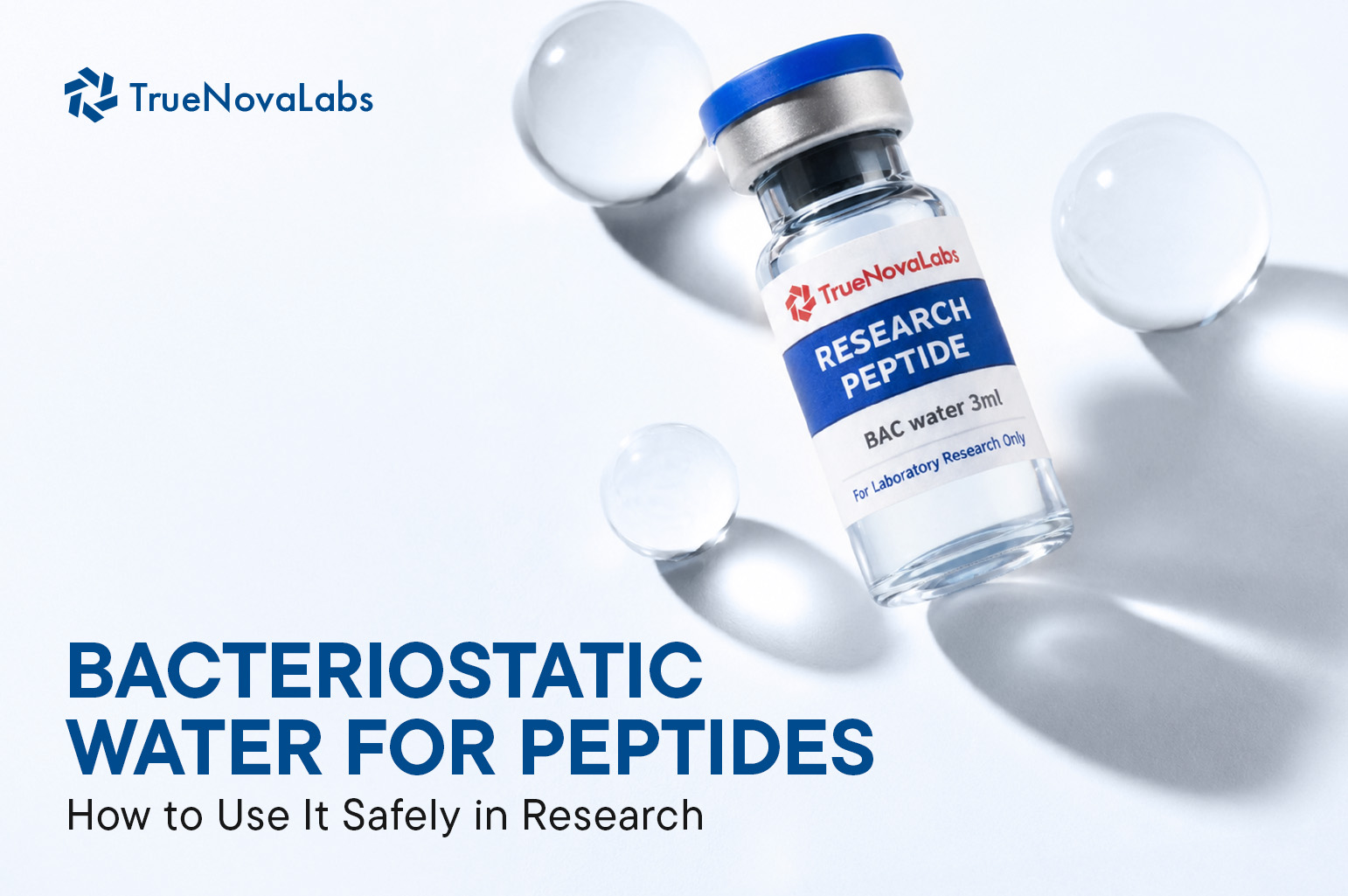
When working with research peptides, one of the most common supporting materials is bacteriostatic water. If you’re new to peptide handling, you may be wondering how it works and why it’s used.
Understanding bacteriostatic water use with peptides is essential for maintaining stability, minimizing contamination risk, and ensuring consistent research conditions—especially in Canada, where peptides are supplied strictly for laboratory and educational use only.
This guide explains what bacteriostatic water is, why researchers commonly use it, and how to handle it properly in a research context.
What Is Bacteriostatic Water?
Bacteriostatic water is a sterile, non-pyrogenic water solution; specifically, it contains a small amount of benzyl alcohol (typically around 0.9%) as a preservative.
This preservative helps:
- Inhibit bacterial growth
- Extend usability after opening
- Maintain solution integrity in controlled environments
Unlike sterile water without preservatives, bacteriostatic water is designed for multi-use scenarios in laboratory settings, making it particularly useful for peptide reconstitution.
Why It Is Used with Peptides
Most research peptides are supplied in lyophilized (powder) form and require reconstitution before use. Therefore, bacteriostatic water is commonly used for this process because it offers additional protection against contamination.
Key Reasons It Is Used
- Reduces contamination risk during handling
- Helps maintain solution stability over time
- Supports consistent preparation across multiple uses
- Suitable for controlled laboratory environments
Because peptides become more sensitive after reconstitution, using a solution with antimicrobial properties can help preserve research reliability.
How to Mix Peptides with BAC Water
Therefore, reconstitution should always be done carefully to avoid damaging the peptide structure or introducing contaminants.
Step-by-Step Overview (Research Context)
- Prepare a Clean Workspace
Ensure all materials are sterile and the environment is controlled. - Clean Vial Tops
Use alcohol swabs on both the peptide vial and bacteriostatic water vial. - Draw the BAC Water
Use a sterile syringe to measure the appropriate volume based on your research protocol. - Inject Slowly
Introduce the liquid slowly along the inner wall of the peptide vial—avoid direct impact on the powder. - Allow to Dissolve Naturally
Do not shake aggressively. Gently swirl if necessary and allow the solution to dissolve gradually. - Label and Store Immediately
Record preparation details and store under proper conditions.
Key principle: Slow, controlled handling helps preserve peptide integrity.
Storage and Shelf Life
Proper storage is critical after reconstitution.
Bacteriostatic Water Storage
- Typically stored at room temperature or refrigerated, depending on protocol
- Should remain sealed when not in use
- Shelf life depends on manufacturer guidelines and handling conditions
Reconstituted Peptides
- Require cold storage in most research environments
- Should be protected from light and contamination
- Stability may decrease over time after mixing
Why Storage Matters
Even with bacteriostatic properties:
- Peptides can degrade over time
- Improper storage can affect research outcomes
- Repeated exposure to air increases contamination risk
Safety Considerations
Working with bacteriostatic water and peptides requires attention to both laboratory practice and regulatory context.
1. Use in Research Context Only
In Canada, research peptides are labeled:
- “For research use only”
- “Not for human consumption”
This distinction is essential for compliance.
2. Follow Proper Sterile Technique
Always:
- Use sterile syringes
- Clean vial tops
- Avoid cross-contamination
3. Verify Product Quality
Choose suppliers that provide:
- Certificate of Analysis (COA)
- Batch-level documentation
- Transparent labeling
4. Understand Regulatory Oversight
Authorities such as Health Canada regulate substances based on intended use and classification.
Products marketed improperly or used outside research contexts may fall under stricter regulations.
FAQ
What is bacteriostatic water used for with peptides?
Researchers commonly use it to reconstitute lyophilized peptides while helping reduce bacterial growth during handling.
Why not use regular sterile water?
Sterile water does not contain preservatives, making it less suitable for multi-use scenarios in research settings.
Can bacteriostatic water prevent peptide degradation?
It helps reduce contamination risk, but it does not stop natural degradation over time.
How should bacteriostatic water be stored?
You should store it according to manufacturer guidelines, typically in a clean, stable environment, and keep it sealed when not in use.
Are peptides mixed with BAC water approved for human use in Canada?
No. Researchers do not approve research peptides for human consumption and intend them strictly for laboratory and educational purposes.
Conclusion
Understanding bacteriostatic water use with peptides is a key part of proper peptide handling.
While it may seem like a simple step, using the right solution—and using it correctly—can significantly impact:
- stability
- contamination risk
- research consistency
For researchers in Canada, the focus should always be on:
- controlled preparation
- proper storage
- compliance with regulatory standards
Good research starts with proper handling—and that includes every step of the reconstitution process.
Explore Research-Grade Peptides
Looking for high-quality research peptides with verified purity and transparent sourcing? Explore the full collection at True Nova Labs
Disclaimer:
This content is provided by True Nova Labs for educational and research purposes only. It is not intended to diagnose, treat, cure, or prevent any disease, nor to provide medical or legal advice.



3 Comments
Amanda Lewis
Very informative and easy to understand. A lot of people overlook how important proper mixing and storage practices are when working with peptides. I also liked the emphasis on safe research handling instead of just focusing on convenience.
Kevin Moore
Good article overall. The section about avoiding contamination was especially helpful because that’s something many beginners in peptide research don’t pay enough attention to. Proper handling definitely makes a big difference in maintaining stability.
Rachel Cooper
I appreciate how this post explains bacteriostatic water in a simple and practical way. There’s a lot of confusing information online, so having a straightforward guide like this is helpful for research purposes. Curious if most labs prefer smaller vials mainly for freshness and reduced contamination risk?