
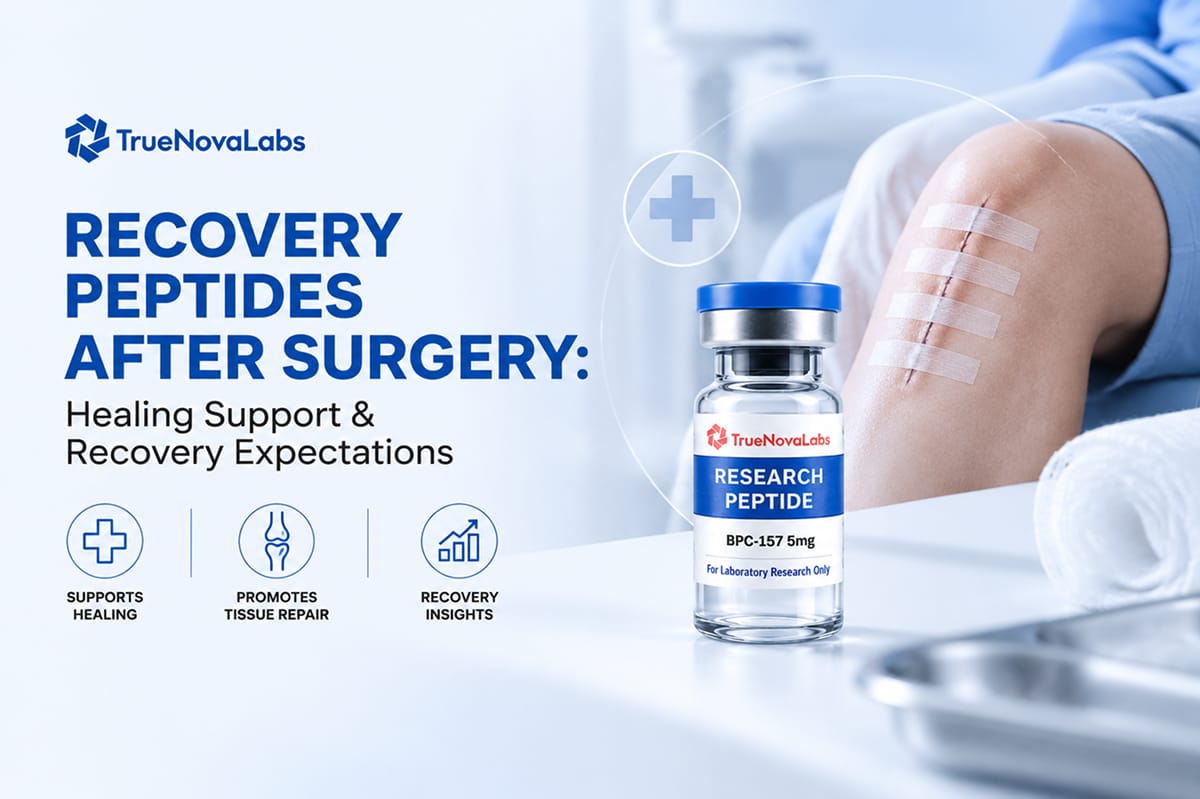
Surgical recovery is a carefully coordinated biological process that involves inflammation control, tissue repair, and gradual restoration of normal function. In particular, depending on the type of surgery and the tissues involved, healing may take weeks or even months as the body progresses through different recovery stages. Therefore, understanding these stages helps researchers and healthcare professionals better evaluate the complex mechanisms involved in tissue healing and recovery.
Interest in recovery peptides after surgery has grown within research communities as scientists investigate how certain peptides may interact with cellular signaling, tissue regeneration, and repair pathways. However, understanding these compounds requires looking at current research evidence, safety considerations, and the complex factors that influence recovery outcomes.
👉 Explore research-grade peptides and learn more about peptide research at True Nova Labs
This guide examines how recovery peptides are studied after surgery, potential mechanisms involved in tissue repair, expected recovery timelines, and important considerations for responsible research. In addition, it explores current scientific findings and the limitations that should be considered when interpreting peptide-related research.
Why Recovery After Surgery Takes Time
Surgical recovery is a complex biological process that requires the body to repair damaged tissue, restore function, and gradually rebuild strength. The healing process involves multiple stages, including inflammation, tissue formation, and long-term remodeling.
This is why interest in recovery peptides after surgery has increased within research discussions. As a result, scientists are exploring how certain peptides may interact with biological pathways related to:
- tissue repair
- cellular communication
- regeneration processes
- recovery signaling
However, surgical recovery depends on many factors, including the type of procedure, tissue involved, individual health conditions, and rehabilitation approach.
In Canada, peptides discussed in this context are primarily supplied for laboratory and educational research purposes only and are not approved medical treatments for surgical recovery. Within this regulatory context, current research focuses on understanding their biological mechanisms, experimental applications, and potential effects in controlled scientific settings. Therefore, findings should be interpreted based on available scientific evidence and the limitations of current research models.
👉 Learn more about performance and recovery peptides at SHOP ALL COMPOUNDS
Popular Recovery Peptides Discussed After Surgery
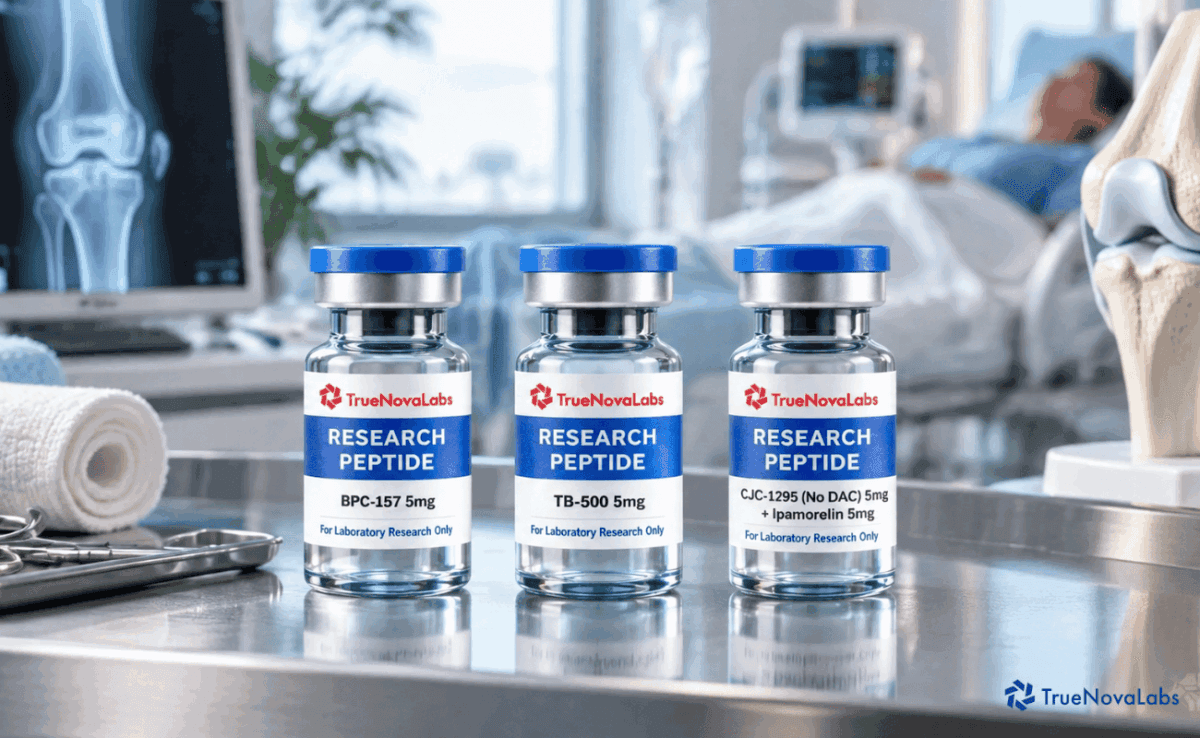
Several peptides are frequently discussed in research related to tissue repair and recovery processes. Among these, scientists investigate different compounds to better understand their potential interactions with cellular signaling, tissue remodeling, and biological pathways involved in repair mechanisms. Furthermore, ongoing studies aim to clarify how these pathways contribute to the broader understanding of tissue maintenance and regeneration.
| Peptide | Research Focus | Recovery Context |
|---|---|---|
| BPC-157 | Tissue repair pathways | Studied in muscle, tendon, and connective tissue models |
| TB-500 (Thymosin Beta-4) | Cell migration and regeneration | Associated with repair and remodeling processes |
| CJC-1295 | Growth hormone signaling | Research related to recovery-related pathways |
| Ipamorelin | Growth hormone release | Studied for endocrine signaling and adaptation |
BPC-157
BPC-157 is one of the most commonly discussed peptides in tissue repair research. Within this field, studies have explored its potential relationship with cellular repair pathways, angiogenesis, tissue remodeling, and biological processes involved in recovery responses. Additionally, these investigations help researchers understand how peptide-related signaling may interact with complex mechanisms involved in tissue maintenance and regeneration.
- cellular repair mechanisms
- connective tissue recovery
- angiogenesis-related pathways
Researchers often investigate BPC-157 in models involving muscles, tendons, and other tissues. In these studies, scientists examine its potential relationship with cellular signaling, tissue organization, and biological pathways associated with repair and recovery processes.
TB-500
TB-500 is associated with Thymosin Beta-4 research and is studied for its involvement in: In particular, researchers investigate its relationship with cellular migration, actin regulation, tissue remodeling, and biological pathways related to recovery processes.
- cell migration
- tissue remodeling
- regeneration-related processes
These mechanisms are important because effective healing requires coordinated movement and activity of different cell types.
CJC-1295 and Ipamorelin
These peptides are primarily researched for their relationship with growth hormone signaling. In this area of study, researchers examine how these compounds may interact with hormonal pathways, cellular communication, and biological processes related to growth and tissue regulation.
Growth hormone-related pathways are studied because they are involved in various biological processes connected to:
- tissue maintenance
- metabolism
- recovery adaptation
How Peptides May Support Tissue Repair
Research into recovery peptides after surgery focuses on how peptides may influence the biological processes involved in healing. Within this field, scientists study their potential relationship with cellular signaling, tissue remodeling, and repair mechanisms in controlled experimental models. In addition, these investigations help researchers better understand how biological pathways contribute to tissue recovery after surgical stress.
Potential areas of study include:
| Research Area | Description |
|---|---|
| Cellular repair | How cells respond after tissue damage |
| Tissue regeneration | Formation and remodeling of new structures |
| Collagen-related pathways | Connective tissue organization |
| Recovery signaling | Communication between cells during healing |
After surgery, the body must coordinate several processes:
- Inflammatory response
- Tissue rebuilding
- Structural remodeling
- Functional recovery
Researchers study whether peptides may interact with these pathways, but current evidence varies depending on the peptide and research model.
Peptides should not be viewed as replacements for surgical care, rehabilitation, or medical guidance. Instead, they are studied within research settings to better understand their potential interactions with biological pathways involved in tissue repair and recovery processes.
👉 Learn more about performance and recovery peptides at SHOP ALL COMPOUNDS
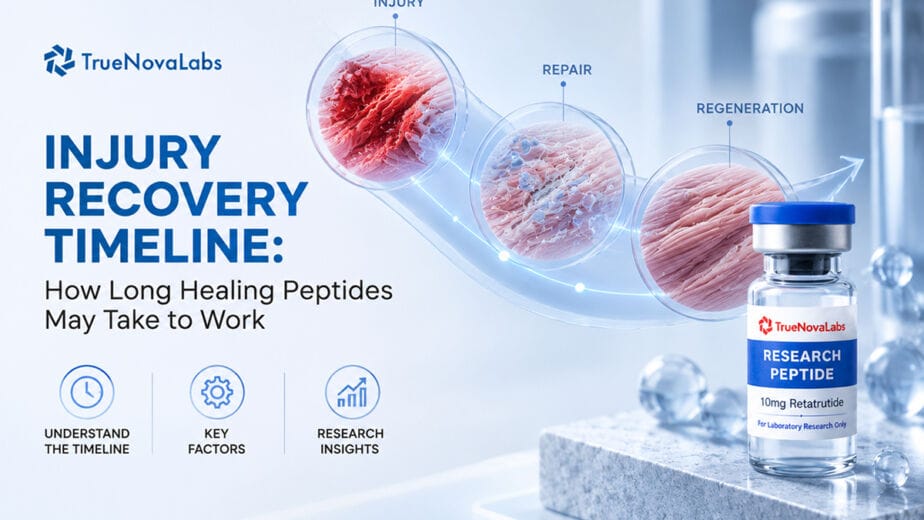
Recovery Expectations and Timelines
Recovery after surgery varies significantly based on:
- surgical procedure
- affected tissue type
- patient health factors
- rehabilitation consistency
- biological response
A general recovery process may include:
| Recovery Stage | Main Biological Focus |
|---|---|
| Early stage | Inflammation control and initial repair |
| Intermediate stage | Tissue rebuilding and strengthening |
| Long-term stage | Remodeling and restoration of function |
Some tissues recover faster than others.
For example:
- Muscle tissue generally has stronger blood supply and may recover differently from connective tissues.
- Tendons and ligaments often require longer remodeling periods.
- Complex surgeries may involve extended rehabilitation timelines.
Research into recovery peptides focuses on understanding these biological processes rather than providing guaranteed recovery timelines.
Risks, Side Effects & Medical Considerations
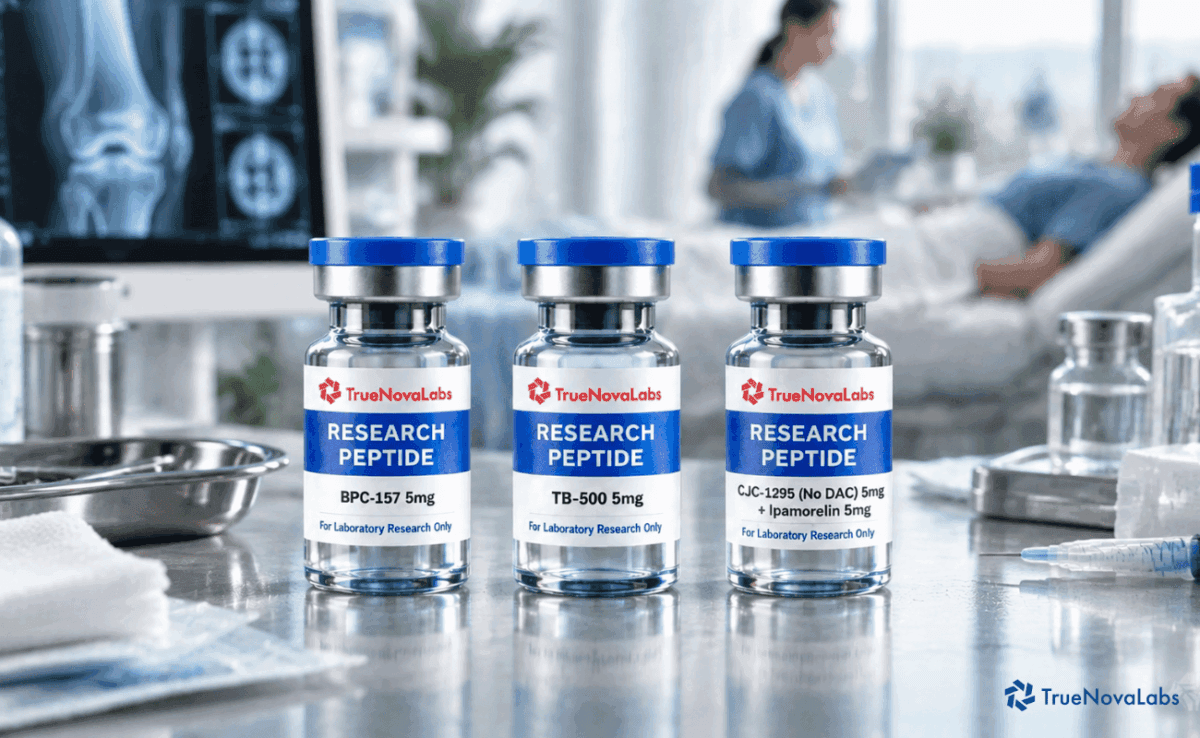
When discussing recovery peptides after surgery, safety considerations are essential. In this context, researchers emphasize the importance of evaluating scientific evidence, experimental limitations, and regulatory considerations when studying peptide-related biological effects.
Potential research concerns include:
| Consideration | Importance |
|---|---|
| Limited clinical data | Some peptides require additional research |
| Individual variability | Responses may differ between individuals |
| Product quality | Purity affects research reliability |
| Storage conditions | Maintains peptide stability |
| Medical interactions | Important when considering surgical recovery |
Because peptides are biologically active molecules, researchers emphasize:
- purity testing
- batch-specific documentation
- proper storage
- controlled research conditions
Common quality verification methods include:
- HPLC testing
- COA documentation
- analytical testing procedures
In Canada, substances are regulated according to classification and intended use by organizations such as Health Canada.
Supporting Post-Surgery Recovery Safely
Successful recovery after surgery depends on more than biological research compounds.
Important recovery strategies include:
Following Medical Guidance
Post-surgical instructions help protect healing tissues and reduce complications. In particular, following professional guidance, allowing adequate recovery time, and gradually returning to activity are important factors in supporting the natural healing process.
Proper Nutrition
Adequate protein and nutrients support the body’s natural repair processes.
Rehabilitation and Physical Therapy
Controlled movement helps restore strength and mobility when appropriate.
Quality Sleep
Sleep contributes to recovery-related biological functions.
Gradual Progression
Returning to normal activity too quickly may place unnecessary stress on healing tissues. Therefore, peptide research should be viewed within this broader recovery framework, where rehabilitation, gradual progression, and evidence-based recovery strategies remain important considerations.
Peptides for joint pain explained. Learn how BPC-157, TB-500, and recovery peptides support tissue repair, mobility, and recovery. Explore more on Peptides for Recovery & Healing: Muscle Repair, Recovery & Regeneration Explained
FAQ – Recovery Peptides After Surgery
What are recovery peptides after surgery?
Recovery peptides are compounds studied for their potential role in biological processes related to tissue repair, regeneration, and recovery signaling. In this area of research, scientists investigate how these compounds may interact with cellular pathways, molecular signals, and tissue-specific mechanisms involved in recovery processes.
Can peptides speed up surgical recovery?
Research explores how peptides may influence repair pathways, but recovery depends on many factors and outcomes are not guaranteed.
Which peptides are commonly studied for recovery?
BPC-157, TB-500, CJC-1295, and Ipamorelin are among the peptides frequently discussed in recovery research.
Are recovery peptides a replacement for surgery aftercare?
No. As part of a complete recovery process, rehabilitation, medical supervision, and proper recovery protocols remain essential components for supporting healing and restoring function.
Are recovery peptides approved in Canada?
Many peptides are classified as research compounds and are not approved therapeutic treatments unless regulated under pharmaceutical frameworks.
Conclusion
Research into recovery peptides after surgery continues to expand as scientists explore how biological signaling influences tissue repair and regeneration. Within this area of study, researchers examine how peptide-related pathways may interact with cellular communication, tissue remodeling, and recovery-associated mechanisms in experimental models.
Current research examines how peptides may interact with:
- cellular repair pathways
- tissue remodeling processes
- recovery signaling
- adaptation mechanisms
However, surgical recovery remains a complex process influenced by medical care, rehabilitation, nutrition, and individual biology.
For researchers in Canada, responsible peptide research requires:
- verified peptide quality
- proper storage and handling
- accurate interpretation of scientific evidence
- realistic expectations
Explore Research-Grade Peptides
Looking for research-grade peptides supported by verified purity, transparent sourcing, and consistent quality standards?
👉 Explore the full collection at TrueNovaLabs: SHOP ALL COMPOUNDS
Disclaimer:
This content is provided by True Nova Labs for educational and research purposes only. It is not intended to diagnose, treat, cure, or prevent any disease, nor to provide medical or legal advice.



3 Comments
Sophie Whitmore
I found the discussion of peptides in post-surgical recovery research interesting, particularly the focus on tissue repair and biological signalling. It’s helpful to see the current evidence discussed alongside the limitations of preclinical research.
Connor Fletcher
The potential role of peptides in tissue-repair research raises some interesting questions. I appreciate the balanced approach here, especially the distinction between findings observed in laboratory or animal studies and evidence from controlled human research.
Rebecca Prescott
I liked the research-focused perspective on peptides and recovery after surgery. Looking at proposed mechanisms, existing evidence, and remaining research gaps provides a more objective way to understand this developing area of study.