
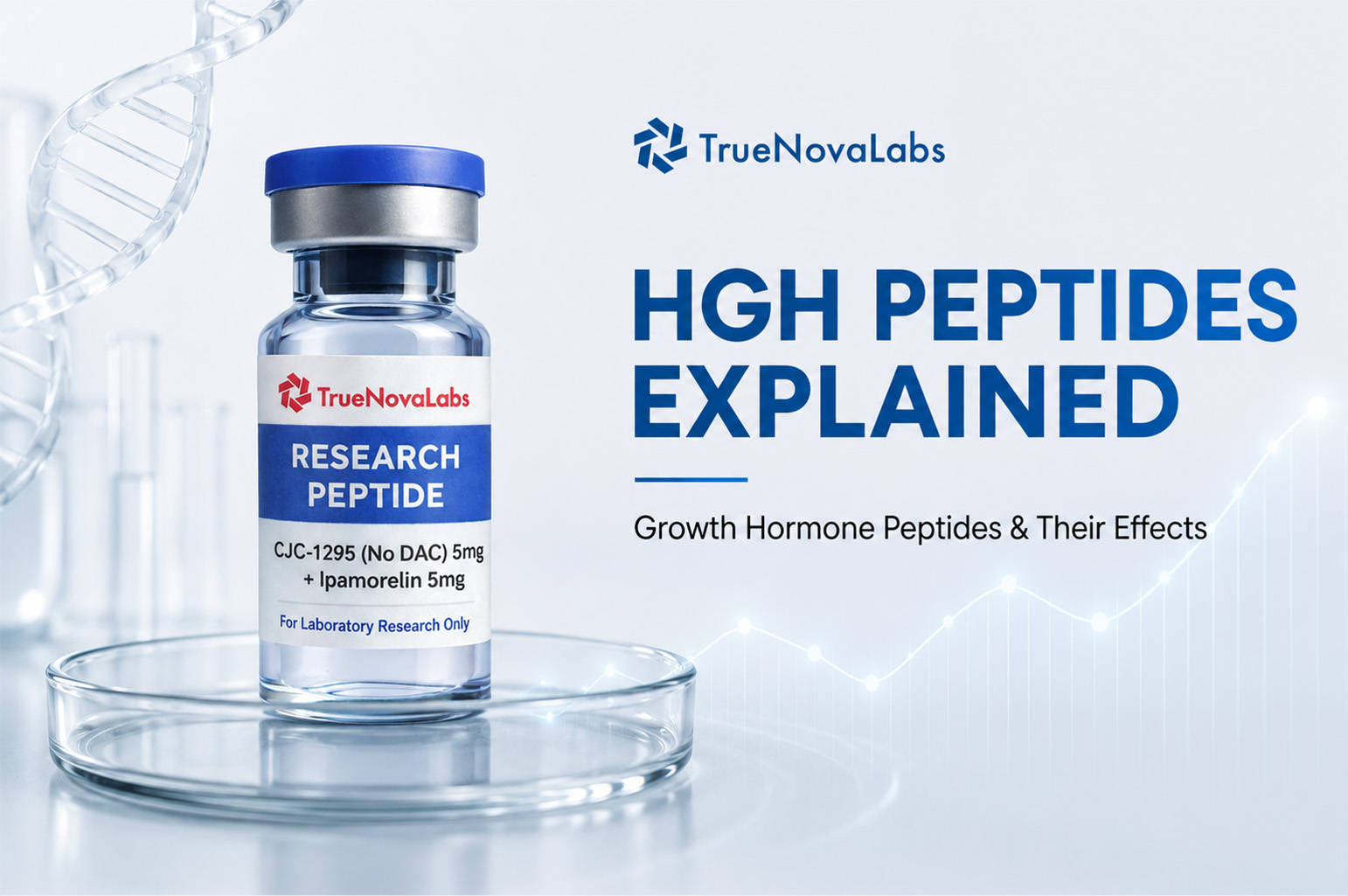
Interest in HGH peptides has grown significantly in research related to muscle recovery, performance adaptation, and endocrine signaling. However, the term itself is often misunderstood.
HGH peptides are not the same as synthetic human growth hormone (HGH). Instead, they are compounds studied for how they influence the body’s natural growth hormone signaling pathways, particularly through the pituitary gland and related endocrine systems.
This distinction is important because modern peptide research focuses less on directly replacing hormones and more on understanding how biological systems regulate:
- growth hormone release
- recovery processes
- tissue repair
- metabolic adaptation
In Canada, many peptides discussed in this space are supplied strictly for laboratory and educational purposes only, not as approved therapeutic or performance-enhancing products.
Looking for research-grade peptides with verified purity and transparent sourcing? Explore the collection at SHOP ALL COMPOUNDS
This guide explains how HGH peptides work, which compounds are most commonly studied, and what current research suggests about their potential effects and limitations. In addition, it highlights why these peptides should be understood within a research-focused framework rather than as direct substitutes for approved hormone therapies.
How HGH Peptides Influence Growth Hormone
These peptides are studied for how they affect the body’s growth hormone (GH) signaling system.
Rather than supplying external HGH directly, many compounds work by stimulating the body’s own hormone release mechanisms. This often involves interaction with:
- growth hormone–releasing hormone (GHRH) pathways
- ghrelin-related signaling
- pituitary gland responses
The goal in research is to observe how these pathways influence:
- recovery and repair
- protein synthesis signaling
- IGF-1 activity
- adaptation to stress and training
This approach is fundamentally different from direct HGH administration because it attempts to work with the body’s signaling systems rather than override them.

Common HGH Peptides Explained
Several peptides are commonly associated with HGH-related research.
CJC-1295
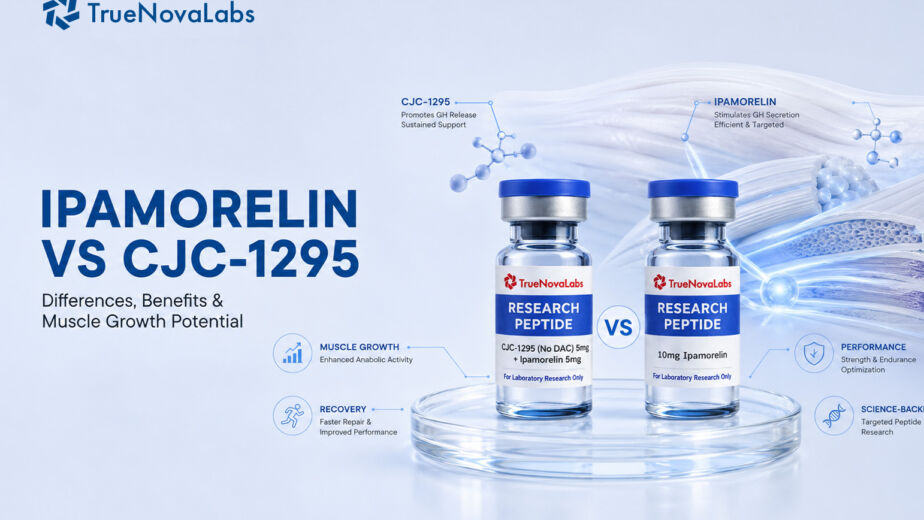
CJC-1295 is a GHRH analog studied for how it may support prolonged growth hormone signaling. Some forms are designed with extended half-lives, allowing researchers to observe sustained GH pathway activity over longer periods.
Ipamorelin
Ipamorelin is often discussed as a selective GH secretagogue. It is studied for how it may stimulate growth hormone release while minimizing broader hormonal disruption.
GHRP Compounds
Growth Hormone Releasing Peptides (GHRPs) are a broader category that includes compounds studied for their interaction with ghrelin-related receptors and GH release pathways.
Tesamorelin
Tesamorelin is another peptide frequently referenced in GH-related research due to its role in stimulating endogenous growth hormone signaling.
Although these peptides are grouped together under the HGH peptide category, they differ significantly in:
- mechanism of action
- duration of signaling
- pathway specificity
This is why direct comparisons can be misleading without understanding the underlying biology.
Potential Benefits for Muscle and Recovery
From a research perspective, HGH peptides are commonly studied for how they may influence:
- recovery efficiency
- tissue repair processes
- growth hormone and IGF-1 signaling
- adaptation to training stress
These effects may contribute to improved recovery and performance consistency over time.
However, it is important to avoid oversimplification.
HGH peptides do not directly “build muscle” in the way many people assume. Instead, they are studied for how they may support the biological environment involved in:
- repair
- recovery
- adaptation
Muscle growth itself still depends heavily on:
- training stimulus
- protein intake
- sleep quality
- overall recovery management
Peptides are explored as one component within that larger system.
👉 Explore research peptides related to recovery and performance here SHOP ALL COMPOUNDS

HGH Peptides vs Traditional HGH Therapy
One of the biggest misconceptions is assuming peptides and HGH therapy are interchangeable. In practice, traditional HGH therapy involves administering synthetic growth hormone directly into the body. By contrast, peptides are studied for how they may stimulate the body’s natural release mechanisms.
This creates several important differences:
| HGH Peptides | Traditional HGH Therapy |
|---|---|
| Influence endogenous GH signaling | Directly supplies external HGH |
| Studied for signaling support | Used as hormone replacement |
| Typically involve pulsatile GH release | Produces externally controlled hormone levels |
| Research-focused in many contexts | Clinical framework in approved settings |
This difference in mechanism is central to understanding why peptides are often discussed separately from direct HGH administration.
Risks, Side Effects & Safety Concerns
Because HGH peptides influence endocrine pathways, safety considerations are important.
Potential concerns in research discussions may include:
- hormonal variability
- signaling imbalance
- digestive or metabolic responses
- altered recovery patterns
However, many risks associated with peptides are tied less to the mechanism itself and more to:
- purity and quality
- contamination during preparation
- improper storage
- inconsistent sourcing
Peptides are highly sensitive compounds, and degradation can significantly affect both stability and research reliability.
In Canada, substances are regulated according to classification and intended use by organizations such as Health Canada.
This reinforces the importance of:
- proper handling
- verified testing
- transparent sourcing
- responsible research practices
Who Commonly Uses HGH Peptides?
From a research perspective, HGH peptides are often discussed in studies related to several key areas, including:
- recovery and adaptation
- muscle repair pathways
- growth hormone signaling
- metabolic regulation
Interest in these compounds is especially common in performance and recovery research because GH pathways influence multiple biological systems simultaneously.
However, these peptides are not intended for casual or unsupervised use.
Understanding their role requires focusing on:
- signaling mechanisms
- biological context
- long-term adaptation processes
rather than expecting immediate physical outcomes.
FAQ
What are HGH peptides?
They are peptides studied for how they influence the body’s natural growth hormone signaling pathways.
Are HGH peptides the same as HGH?
No. HGH peptides stimulate endogenous hormone signaling, while HGH therapy directly supplies synthetic growth hormone.
Do HGH peptides build muscle directly?
No. They are studied for how they support recovery, adaptation, and anabolic signaling pathways.
What are the most common HGH peptides?
CJC-1295, Ipamorelin, Tesamorelin, and various GHRP compounds are among the most frequently discussed.
Are HGH peptides legal in Canada?
Regulation depends on classification and intended use. Many are supplied as research peptides rather than approved therapeutic products.
Conclusion
Understanding HGH peptides means understanding how the body regulates recovery, growth, and adaptation through signaling systems.
Unlike direct hormone replacement approaches, these compounds are studied for how they influence:
- endogenous GH release
- recovery pathways
- tissue repair
- long-term adaptation
Their role in research is not about forcing rapid outcomes, but about exploring how biological systems respond to controlled signaling over time.
For researchers in Canada, reliable outcomes depend on:
- verified peptide quality
- proper storage and handling
- understanding endocrine mechanisms
- realistic expectations
Explore Research-Grade Peptides
If you’re looking for peptides supported by verified purity, transparent sourcing, and consistent quality standards, explore the full collection here SHOP ALL COMPOUNDS
Disclaimer:
This content is provided by True Nova Labs for educational and research purposes only. It is not intended to diagnose, treat, cure, or prevent any disease, nor to provide medical or legal advice.



3 Comments
Emily Dawson
Really informative explanation of HGH peptides and how they may interact with the body’s natural growth hormone signaling system. I liked that the article focused on mechanisms and realistic expectations instead of oversimplifying the topic. The comparison between HGH therapy and HGH peptides was especially helpful.
Ryan Mitchell
Great read overall. There’s a lot of confusion online about HGH-related peptides, so I appreciated how clearly the article broke down the differences between direct hormone therapy and peptides that may stimulate natural release pathways. The balanced tone made the information feel much more trustworthy.
Jason Walker
Very well structured and easy to follow, even for readers who are still new to peptide research. I especially liked the sections discussing signaling pathways and how different peptides may influence recovery and performance differently. It would be interesting to see a future article comparing the most commonly researched HGH peptides side by side.