
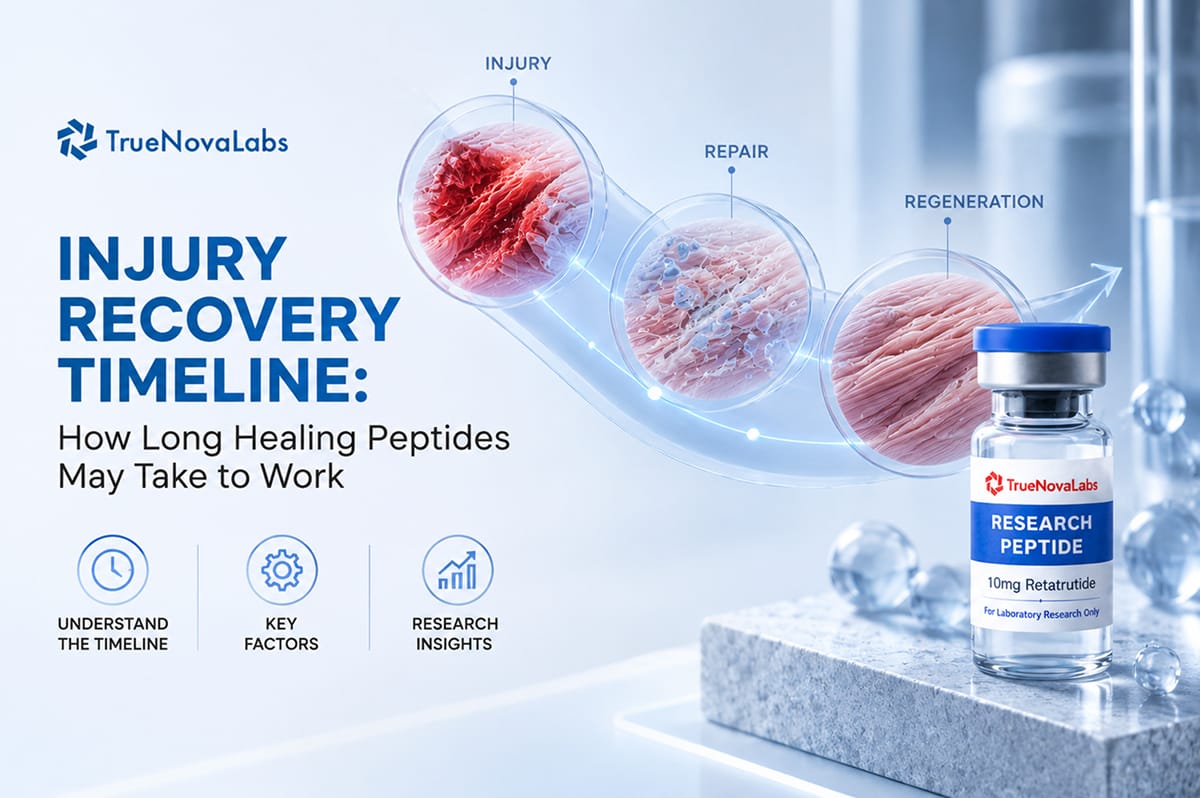
Understanding an injury recovery timeline is essential for athletes, researchers, and anyone interested in tissue repair processes. In particular, recovery is not a single event—it is a complex biological process involving inflammation regulation, tissue remodeling, cellular repair, and the gradual restoration of normal function.
In recent research discussions, healing peptides have gained attention because of their potential role in supporting the biological pathways involved in recovery. Researchers study these compounds for how they may influence tissue repair, regeneration signaling, and adaptation after physical stress.
However, recovery timelines vary significantly depending on the injury type, severity, biological factors, and overall recovery environment.
In Canada, peptides discussed in this context are primarily supplied for laboratory and educational research purposes only and are not approved medical treatments. In particular, current research focuses on understanding their biological mechanisms, experimental applications, and potential areas of scientific investigation.
👉 Explore research-grade peptides with verified purity and transparent sourcing at True Nova Labs
This guide explains how injury recovery timelines work, how recovery peptides are studied, and why healing speed differs between individuals. In particular, it explores the biological factors that influence recovery stages, experimental research approaches, and the limitations of current scientific understanding.
Factors That Affect Recovery Timelines
Every injury follows a different recovery pathway. The time required for healing depends on several factors, including:
| Factor | How It Influences Recovery |
|---|---|
| Injury severity | More extensive tissue damage generally requires longer repair periods |
| Tissue type | Muscle, tendon, ligament, and cartilage recover at different rates |
| Blood supply | Tissues with better circulation often have stronger repair capacity |
| Age and biology | Individual healing responses can vary significantly |
| Recovery environment | Nutrition, sleep, rehabilitation, and activity levels influence outcomes |
For example, muscle tissue typically has a different recovery process compared with tendons or ligaments because connective tissues have slower remodeling cycles.
This is why there is no universal recovery timeline that applies to every injury.
👉 Learn more about performance and recovery peptides at SHOP ALL COMPOUNDS
Early Stages of Injury Recovery
The early phase of recovery usually begins immediately after tissue stress or injury. In particular, researchers commonly describe recovery as involving several overlapping stages:
| Recovery Stage | Biological Process |
|---|---|
| Inflammatory phase | The body responds to tissue damage and begins repair signaling |
| Repair phase | New cells and structural proteins support tissue rebuilding |
| Remodeling phase | Tissue gradually strengthens and adapts to physical demands |
During these stages, researchers study how different compounds may influence processes such as:
- cellular communication
- tissue regeneration
- collagen-related pathways
- recovery signaling
The goal of recovery research is not simply to speed up healing but to better understand how biological systems coordinate repair.
How Recovery Peptides May Support Healing
Recovery peptides are studied for their potential influence on biological pathways involved in tissue repair. In particular, researchers investigate how these peptides may interact with cellular signaling, tissue remodeling, and regenerative mechanisms in controlled experimental settings
Some commonly discussed compounds include:
| Peptide | Research Focus |
|---|---|
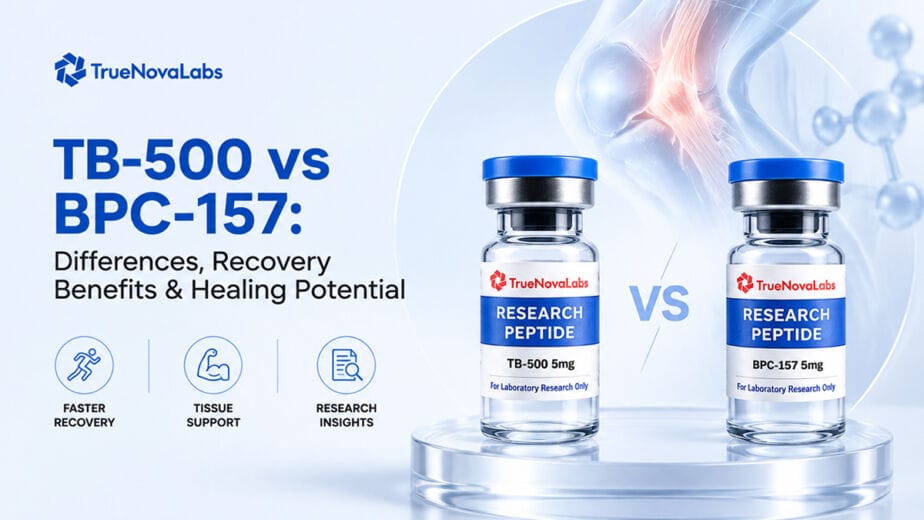
| BPC-157 | Tissue repair and regeneration models |
| TB-500 (Thymosin Beta-4) | Cell migration and regenerative processes |
| CJC-1295 | Growth hormone signaling pathways |
| Ipamorelin | Growth hormone release and recovery-related signaling |
Research suggests these peptides may be involved in areas such as:
- supporting cellular repair mechanisms
- influencing tissue adaptation
- regulating recovery-related signaling pathways
However, peptides are not considered instant healing solutions.
Recovery depends on the interaction between:
- biological response
- injury characteristics
- rehabilitation approach
- overall health factors
Typical Recovery Expectations Over Time
While every injury is different, recovery is generally a gradual process.
A simplified timeline may look like this:
| Time Period | General Recovery Focus |
|---|---|
| Early days | Managing tissue response and beginning repair processes |
| Several weeks | Tissue rebuilding and gradual restoration of function |
| Months | Remodeling, strengthening, and adaptation |
For soft tissue injuries, recovery may require weeks or months depending on severity.
More complex injuries involving tendons, ligaments, or connective tissue may require longer adaptation periods because these structures remodel more slowly.
Research into recovery peptides focuses on understanding how these biological processes may be supported over time—not creating immediate results.
👉 Learn more about performance and recovery peptides at SHOP ALL COMPOUNDS
Why Recovery Speed Varies Between Individuals
Two people with similar injuries may recover at completely different speeds.
Factors that influence recovery differences include:
- genetics and biological variability
- training history
- nutrition status
- sleep quality
- rehabilitation consistency
- injury management strategies
Additionally, the same peptide or recovery approach may produce different outcomes depending on the individual research model and conditions.
This is why researchers emphasize controlled environments and accurate interpretation rather than assuming identical results.
Supporting Recovery With Lifestyle and Rehab
Recovery peptides are only one area of research. In particular, effective healing typically involves multiple supporting factors, including rehabilitation approaches, nutrition, lifestyle factors, and the body’s own biological recovery processes.
Important recovery strategies include:
Proper Rehabilitation
Structured movement and rehabilitation help restore strength, mobility, and tissue function.
Nutrition Support
Adequate protein intake and essential nutrients provide the building blocks required for repair processes.
Sleep Optimization
Sleep plays an important role in recovery-related hormonal activity and tissue restoration.
Gradual Return to Activity
Progressive loading helps tissues adapt without creating excessive stress.
A complete recovery approach combines biological understanding with practical rehabilitation strategies.
Risks and Safety Considerations
Because peptides are biologically active compounds, quality and handling are important considerations.
Potential research concerns include:
| Consideration | Why It Matters |
|---|---|
| Purity testing | Helps ensure research consistency |
| Storage conditions | Maintains peptide stability |
| Handling procedures | Reduces contamination risk |
| Batch documentation | Supports reproducibility |
Many peptide-related risks are associated with improper storage, inconsistent sourcing, or poor-quality materials.
In Canada, substances are regulated based on classification and intended use by organizations such as Health Canada.
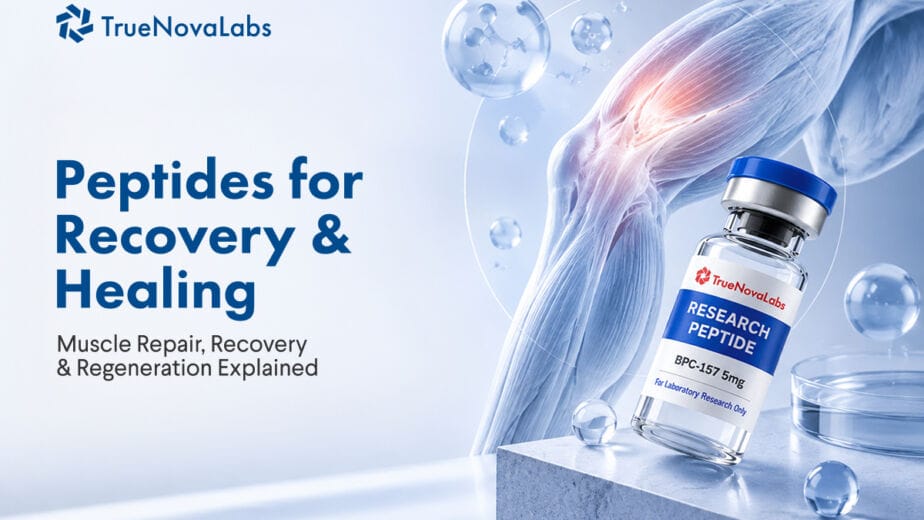
Peptides for joint pain explained. Learn how BPC-157, TB-500, and recovery peptides support tissue repair, mobility, and recovery. Explore more on Peptides for Recovery & Healing: Muscle Repair, Recovery & Regeneration Explained
FAQ – Injury Recovery Timeline
How long does injury recovery usually take?
Recovery time depends on injury type, severity, tissue involved, and individual biological factors. Some injuries improve within weeks, while others may require months.
Can peptides speed up injury recovery?
Peptides are studied for their potential role in supporting repair pathways, but recovery outcomes depend on multiple factors.
Which peptides are commonly researched for recovery?
BPC-157, TB-500, CJC-1295, and Ipamorelin are frequently discussed in recovery-related research. In particular, these peptides are investigated for their potential relationships with cellular signaling, tissue biology, and biological pathways associated with repair and regeneration in experimental models.
Do recovery peptides replace rehabilitation?
No. Rehabilitation, proper nutrition, and gradual return to activity remain important components of recovery. In particular, these factors support the body’s natural healing processes and help researchers better understand how recovery progresses across different stages.
Are healing peptides approved treatments in Canada?
Many peptides are classified as research compounds and are not approved therapeutic products unless regulated under pharmaceutical frameworks.
Conclusion
Understanding an injury recovery timeline requires recognizing that healing is a complex biological process influenced by many variables. In particular, factors such as injury severity, tissue type, biological responses, rehabilitation strategies, and individual differences can affect the overall recovery process.
Research into healing peptides focuses on how these compounds may support:
- tissue repair pathways
- cellular communication
- recovery signaling
- adaptation after injury
Rather than providing instant recovery, peptides are studied as part of a broader understanding of how the body repairs and rebuilds tissue.
For researchers in Canada, reliable outcomes depend on:
- verified peptide quality
- proper storage and handling
- realistic expectations
- integration with rehabilitation strategies
Explore Research-Grade Peptides
Looking for peptides supported by verified purity, transparent sourcing, and consistent quality standards?
👉 Explore the full collection at TrueNovaLabs: SHOP ALL COMPOUNDS
Disclaimer:
This content is provided by True Nova Labs for educational and research purposes only. It is not intended to diagnose, treat, cure, or prevent any disease, nor to provide medical or legal advice.



3 Comments
Daniel Mercer
I found this injury recovery timeline helpful because it gives a clearer picture of how recovery can progress through different stages. The reminder that timelines can vary depending on the type and severity of an injury is especially important when setting realistic expectations.
Rebecca Foster
The step-by-step overview makes the injury recovery process much easier to understand. I especially appreciate the focus on gradual progress rather than treating recovery as a fixed schedule, since every injury and individual can respond differently.
Matthew Collins
I liked how the article breaks down recovery into manageable stages while acknowledging that healing is not always linear. Having a general framework for what to expect can be useful, as long as it is understood as a guide rather than a guaranteed timeline.