

Joint pain is a common concern for athletes, bodybuilders, and individuals engaging in frequent physical activity. While traditional treatments focus on pain management, researchers are increasingly studying peptides for joint pain to understand how they may support tissue repair, recovery, and mobility.
These peptides are not direct cures but are explored for their role in supporting the biological processes involved in joint repair and inflammation modulation. In Canada, most peptides referenced in this context are supplied strictly for laboratory and educational purposes. Therefore, they are not approved as therapeutic treatments.
👉 Explore research-grade peptides for recovery and joint support at True Nova Labs
This guide provides an overview of how peptides may support joint recovery, which compounds are most frequently studied, and what factors influence their effectiveness. In addition, it highlights key considerations for interpreting research findings within controlled experimental settings.
Why Joint Pain Happens
Joint pain can arise from a variety of causes. For example,
- Mechanical stress on cartilage and connective tissue
- Micro-injuries from repetitive movements
- Inflammatory responses after intense physical activity
- Age-related wear and tear on joint structures
Consequently, recovery strategies aim to reduce tissue stress, support repair processes, and maintain mobility.
👉 Learn more about performance and recovery peptides at SHOP ALL COMPOUNDS
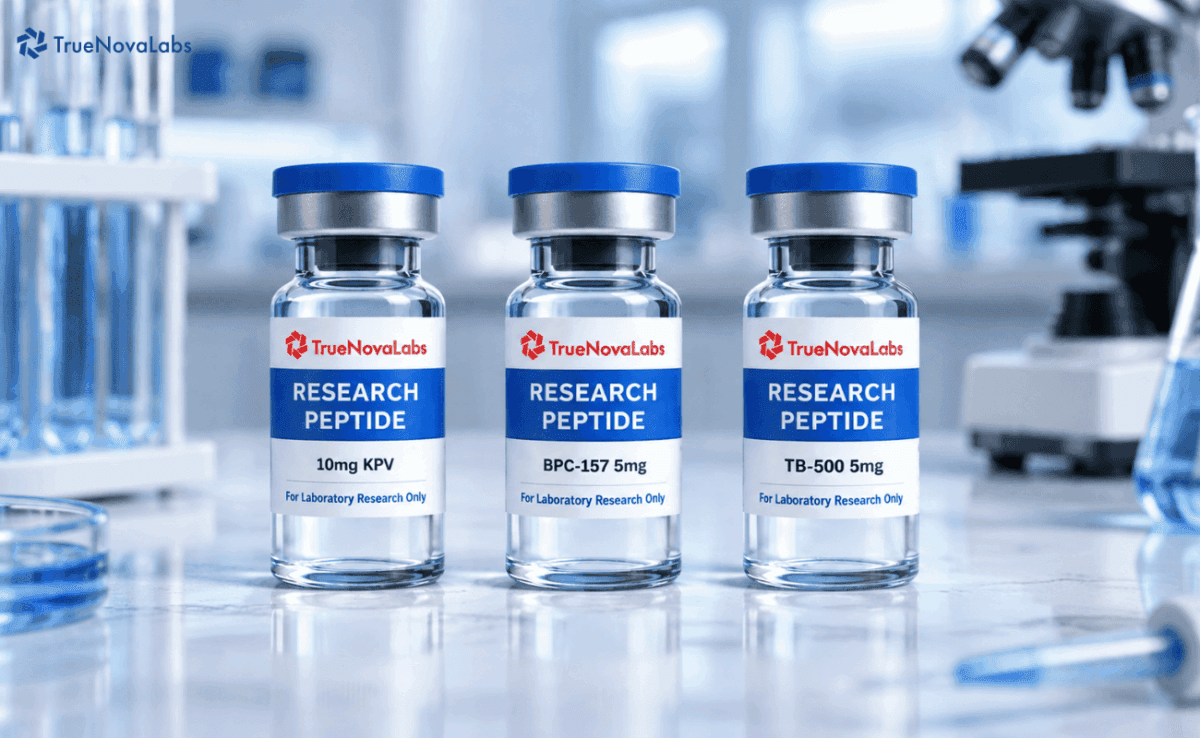
Popular Peptides Used for Joint Support
Several peptides are frequently studied for their potential role in joint and connective tissue recovery. In particular, these compounds are examined for their effects on tissue repair, inflammation modulation, and connective tissue adaptation.
| Peptide | Primary Research Focus | Joint Support Context |
|---|---|---|
| BPC-157 | Tissue repair and regeneration | Studied for tendons, ligaments, and cartilage support |
| TB-500 (Thymosin Beta-4) | Cell migration and repair | Explored in connective tissue recovery and repair processes |
These peptides are often combined in research studies to explore synergistic effects on tissue repair and joint recovery. As a result, researchers can examine how multiple compounds may interact within recovery pathways.
How Peptides May Support Recovery and Mobility
Research suggests that recovery peptides may influence joint health through several key mechanisms, including:
- Cellular regeneration: Supporting repair of cartilage and connective tissues
- Anti-inflammatory pathways: Modulating local inflammatory responses
- Collagen synthesis: Contributing to tendon and ligament repair
- Recovery signaling: Enhancing the body’s natural adaptation to mechanical stress
In other words, these peptides are studied for their potential to support tissue repair, adaptation, and overall joint resilience.
While these effects are promising in research contexts, they are not guaranteed outcomes in practical application.
Benefits and Limitations for Joint Health
Potential benefits of peptides for joint support in research include several important effects, such as:
| Benefit | Research Context |
|---|---|
| Tissue repair | Supports ligaments, tendons, and cartilage recovery |
| Recovery efficiency | Reduces downtime between training or activity sessions |
| Mobility support | Maintains connective tissue function and adaptation |
Limitations include:
- Peptides do not provide immediate pain relief
- Efficacy depends on tissue condition, activity level, and biological variability
- They are primarily studied for research purposes, not clinical treatment
In other words, researchers should consider these compounds as research tools rather than direct therapeutic solutions.
👉 Learn more about performance and recovery peptides at SHOP ALL COMPOUNDS
Risks and Side Effects to Consider
Like all biologically active compounds, peptides require careful handling. For example, this includes:
- Potential hormonal signaling variability
- Contamination or degradation if improperly stored
- Individual differences in biological response
In research contexts, most risks are associated with purity, storage, and handling rather than the peptide’s mechanism itself.
| Quality Factor | Why It Matters |
|---|---|
| Purity verification | Ensures reliable and reproducible research outcomes |
| Storage conditions | Maintains peptide stability and activity |
| Supplier transparency | Improves consistency and reliability |
Additional Recovery Strategies for Joint Pain
Peptides are just one component of a comprehensive joint health strategy. In addition, complementary approaches include:
- Structured rest and recovery periods
- Proper nutrition and protein intake support tissue repair.
- Joint mobility and flexibility exercises
- Anti-inflammatory strategies such as controlled activity and physical therapy
Integrating peptides with these strategies may provide a more holistic approach to supporting joint recovery. In this way, researchers can study how combined interventions influence tissue repair, adaptation, and overall joint health.
Peptides for joint pain explained. Learn how BPC-157, TB-500, and recovery peptides support tissue repair, mobility, and recovery. Explore more on Peptides for Recovery & Healing: Muscle Repair, Recovery & Regeneration Explained
FAQ – Peptides For Joint Pain
What are peptides for joint pain?
They are compounds studied for how they may support tissue repair, recovery, and connective tissue adaptation in joints. In other words, researchers examine them to understand how biological repair and adaptation processes respond to stress, injury, or training.
Do peptides cure joint pain?
No. Instead, they are studied for recovery support and tissue health, rather than as direct treatments.
Which peptides are commonly used for joint support?
Researchers most frequently discuss BPC-157 and TB-500. They often examine these peptides for their roles in tissue repair, connective tissue adaptation, and recovery processes.
Are peptides approved for joint treatment in Canada?
Most of these compounds are supplied as research compounds and do not qualify as approved therapeutic products unless pharmaceutical frameworks regulate them.
Conclusion
Peptides for joint pain are primarily studied for their ability to support tissue repair, recovery, and connective tissue adaptation. While not direct cures, they may provide research insights into how biological systems respond to stress and injury in joints.
For researchers in Canada, reliable outcomes depend on several key factors, including verified peptide quality, proper storage and handling, and integration with recovery strategies and physical conditioning.
Explore Research-Grade Peptides
For researchers seeking reliable compounds, looking for research-grade peptides with verified purity and consistent quality standards is essential. In this way, they can ensure accurate and reproducible results.
👉 Explore the full collection at TrueNovaLabs: SHOP ALL COMPOUNDS
Disclaimer:
This content is provided by True Nova Labs for educational and research purposes only. It is not intended to diagnose, treat, cure, or prevent any disease, nor to provide medical or legal advice.





3 Comments
Lauren Mitchell
I found the discussion of peptides and joint-related research quite interesting, especially the focus on how these compounds are being investigated in relation to tissue and inflammatory pathways. The distinction between experimental findings and established clinical evidence is particularly helpful when looking into an emerging research area.
Christopher Dawson
The overview of peptide research related to joint health provides an interesting look at the biological mechanisms researchers are exploring. I appreciate the balanced presentation, particularly the reminder that promising laboratory findings do not necessarily translate into proven outcomes in humans.
Sophie Caldwell
I liked the research-focused approach to peptides and joint-related processes. Understanding the current evidence, proposed mechanisms, and remaining research gaps makes it easier to put the potential applications of these compounds into the right scientific context.