

Inflammation is a fundamental part of the body’s natural response to stress, injury, and physical activity. While inflammation plays an important role in initiating repair, researchers continue to explore how biological pathways involved in inflammation may affect recovery outcomes.
Interest in peptides for inflammation has increased as scientists investigate how specific peptides may interact with cellular signaling, tissue repair mechanisms, and recovery processes. Rather than acting as simple anti-inflammatory compounds, peptides are studied for their potential role in regulating complex biological responses.
Understanding the relationship between peptides and inflammation requires looking at current research, potential mechanisms, safety considerations, and the limitations of available evidence.
👉 Explore research-grade peptides and learn more about peptide research at True Nova Labs
This guide examines how peptides are studied in inflammation-related research, their potential connection to recovery support, and the factors that influence research outcomes.
Understanding Inflammation and Recovery
Inflammation is a natural biological response that plays an important role in protecting the body and initiating repair processes. When tissues experience stress, injury, or intense physical activity, the body activates inflammatory pathways to begin recovery.
However, inflammation is a complex process. While short-term inflammation can support healing, prolonged or uncontrolled inflammatory responses may affect tissue recovery and overall function.
This has led researchers to investigate peptides for inflammation and their potential role in understanding recovery pathways, cellular signaling, and tissue adaptation.
Peptides are studied for how they may influence biological processes related to:
- inflammatory signaling
- tissue repair mechanisms
- cellular communication
- recovery responses
In Canada, peptides discussed in this context are primarily supplied for laboratory and educational research purposes only and are not approved medical treatments.
👉 Learn more about performance and recovery peptides at SHOP ALL COMPOUNDS
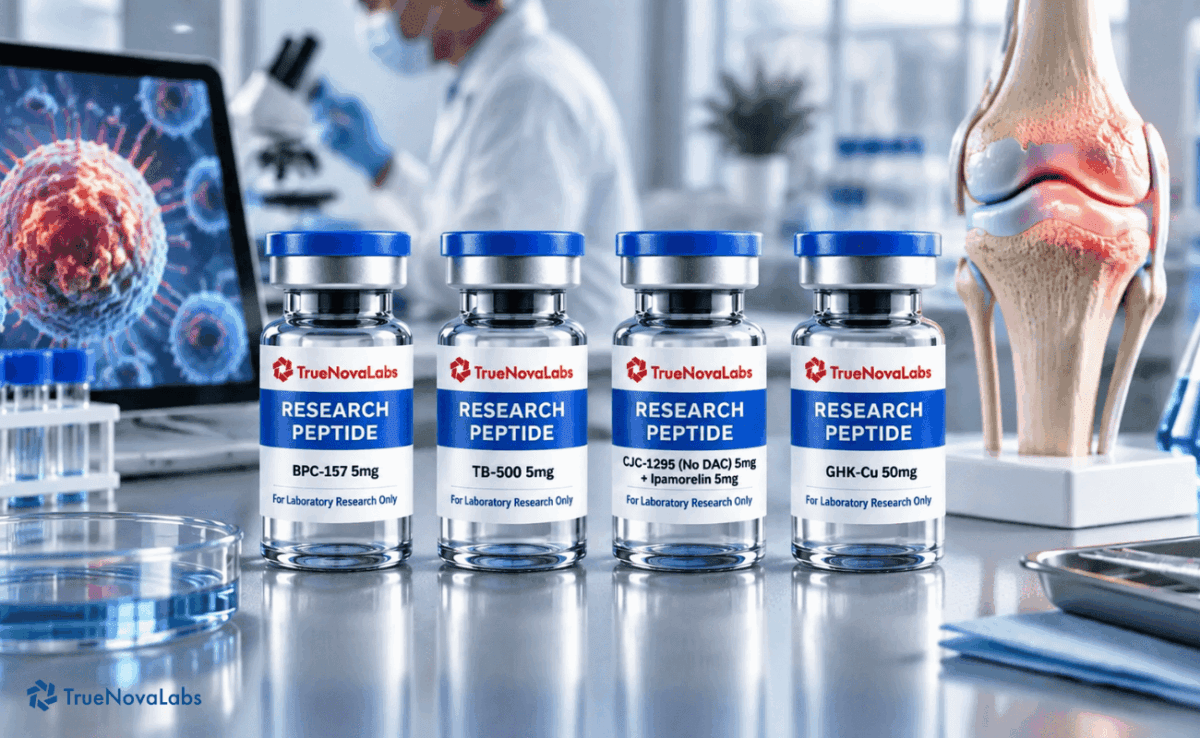
Popular Peptides Linked to Inflammation Support
Several peptides are frequently discussed in research related to inflammation, tissue repair, and recovery pathways.
| Peptide | Research Focus | Inflammation-Related Context |
|---|---|---|
| BPC-157 | Tissue repair signaling | Studied in models involving recovery and tissue stress |
| TB-500 (Thymosin Beta-4) | Cell migration and regeneration | Associated with repair and remodeling pathways |
| KPV | Inflammatory signaling pathways | Studied for interactions with inflammation-related mechanisms |
| GHK-Cu | Cellular repair and regeneration | Research interest in tissue remodeling processes |
BPC-157
BPC-157 is commonly studied in relation to tissue repair and recovery pathways. Research has explored its potential relationship with cellular signaling involved in muscle, tendon, and connective tissue models.
TB-500
TB-500 is associated with Thymosin Beta-4 research and is studied for its role in processes such as:
- cell migration
- tissue remodeling
- regeneration-related pathways
KPV
KPV is a peptide fragment studied for its relationship with inflammatory signaling mechanisms. Researchers investigate how it may interact with pathways involved in regulating inflammatory responses.
GHK-Cu
GHK-Cu is researched for its association with:
- skin and tissue regeneration
- extracellular matrix remodeling
- cellular repair processes
Each peptide is studied through different biological mechanisms, meaning they should not be considered interchangeable.
How Peptides May Influence Recovery Processes
Research into peptides for inflammation focuses on how these compounds may interact with biological pathways involved in recovery.
Potential areas of study include:
| Research Area | Description |
|---|---|
| Inflammatory signaling | How cells communicate during stress and repair |
| Tissue regeneration | Processes involved in rebuilding damaged structures |
| Cellular communication | Signals that coordinate recovery responses |
| Recovery adaptation | How tissues respond after physical stress |
Peptides do not simply “remove inflammation.” Instead, researchers study how they may influence the balance between inflammatory activity and repair processes.
Effective recovery requires coordinated biological responses involving:
- immune signaling
- tissue remodeling
- cellular repair
- structural adaptation
👉 Learn more about performance and recovery peptides at SHOP ALL COMPOUNDS
Benefits for Joint and Muscle Recovery
Inflammation plays a major role in recovery from physical stress, making it an important area of peptide research.
From a research perspective, peptides may be investigated for their potential relationship with:
| Recovery Area | Research Interest |
|---|---|
| Muscle recovery | Repair processes after exercise-related stress |
| Tendon support | Connective tissue adaptation |
| Joint recovery | Tissue maintenance and remodeling |
| Training adaptation | Recovery between physical activities |
For example, researchers studying BPC-157 and TB-500 often focus on how these compounds may interact with tissue repair pathways.
However, recovery outcomes depend on many variables, including:
- injury severity
- training intensity
- nutrition
- sleep quality
- individual biology
Peptides are studied as part of a larger recovery system rather than standalone solutions.
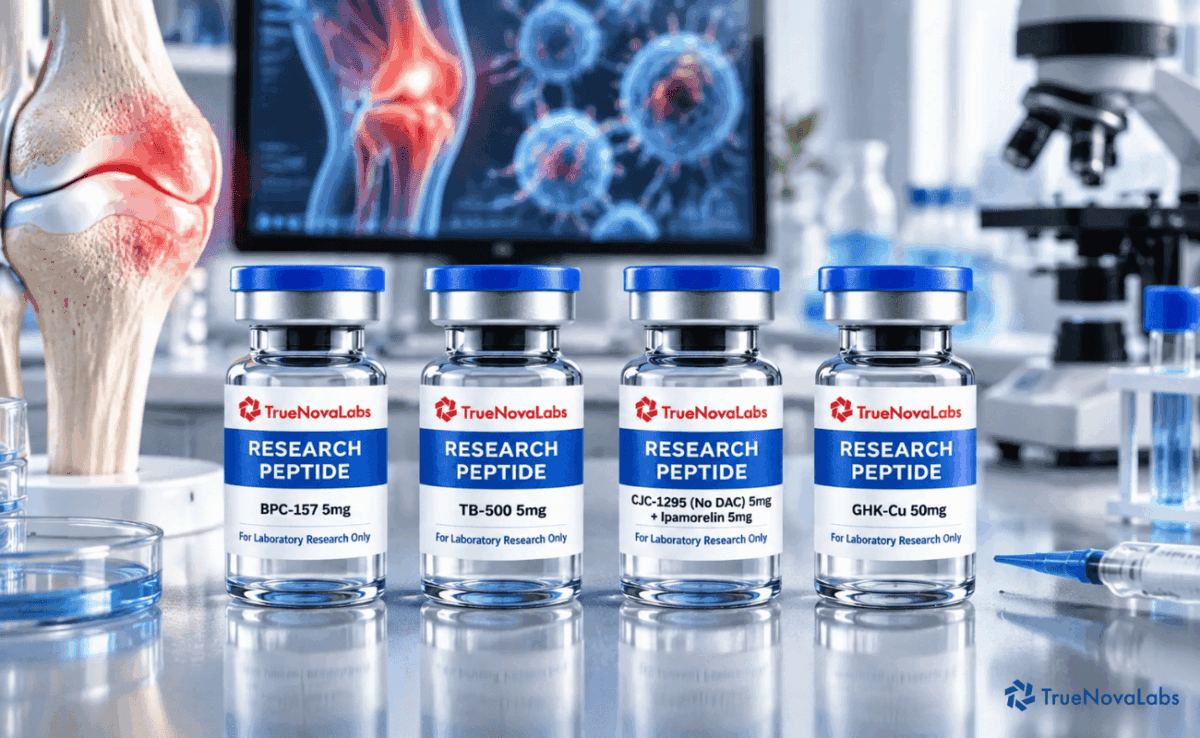
Risks and Side Effects to Consider
Because peptides are biologically active compounds, safety evaluation is an essential part of research.
Potential concerns include:
| Consideration | Why It Matters |
|---|---|
| Limited research data | Some peptides require further investigation |
| Biological variability | Responses may differ between individuals |
| Product quality | Purity affects research reliability |
| Storage conditions | Improper storage may affect stability |
| Handling procedures | Helps reduce contamination risks |
Common quality considerations in peptide research include:
- HPLC testing
- batch-specific COAs
- proper storage protocols
- transparent sourcing information
Many risks associated with peptide research are related to inconsistent quality or handling rather than the biological mechanism being studied.
In Canada, substances are regulated according to classification and intended use by organizations such as Health Canada.
Supporting Recovery Beyond Peptides
Inflammation management and recovery involve many factors beyond peptide research.
A complete recovery approach may include:
Proper Training Management
Avoiding excessive stress allows tissues to adapt effectively.
Nutrition Support
Adequate nutrients provide the foundation for repair processes.
Quality Sleep
Sleep supports recovery-related biological functions.
Rehabilitation Strategies
Structured movement and gradual loading help restore function.
Peptides are studied as one potential component within a broader understanding of recovery biology.
Peptides for joint pain explained. Learn how BPC-157, TB-500, and recovery peptides support tissue repair, mobility, and recovery. Explore more on Peptides for Recovery & Healing: Muscle Repair, Recovery & Regeneration Explained
FAQ – Peptides For Inflammation
What are peptides for inflammation?
They are peptides studied for their potential influence on inflammatory signaling, tissue repair, and recovery pathways.
Do peptides eliminate inflammation?
No. Research focuses on how peptides may interact with biological processes involved in inflammation and recovery.
Which peptides are commonly studied for inflammation?
BPC-157, TB-500, KPV, and GHK-Cu are among the peptides frequently discussed in inflammation-related research.
Can peptides replace recovery strategies?
No. Proper nutrition, rehabilitation, sleep, and activity management remain essential parts of recovery.
Are inflammation-related peptides approved in Canada?
Many peptides are classified as research compounds and are not approved therapeutic products unless regulated under pharmaceutical frameworks.
Conclusion
Research into peptides for inflammation continues to expand as scientists explore how biological signaling influences recovery, tissue repair, and adaptation.
Current research focuses on how peptides may interact with:
- inflammatory pathways
- cellular repair mechanisms
- tissue regeneration processes
- recovery signaling
While peptides represent an interesting area of scientific investigation, recovery depends on multiple factors working together.
For researchers in Canada, responsible peptide research requires:
- verified peptide quality
- proper storage and handling
- accurate interpretation of evidence
- realistic expectations
Explore Research-Grade Peptides
Looking for research-grade peptides supported by verified purity, transparent sourcing, and consistent quality standards?
👉 Explore the full collection at TrueNovaLabs: SHOP ALL COMPOUNDS
Disclaimer:
This content is provided by True Nova Labs for educational and research purposes only. It is not intended to diagnose, treat, cure, or prevent any disease, nor to provide medical or legal advice.





3 Comments
Rebecca Wellington
I found the discussion around peptides and inflammation quite interesting, especially the focus on the biological pathways involved in inflammatory responses. The research-based approach helps put some of the claims surrounding these compounds into better perspective.
Thomas Prescott
The connection between peptide signalling and inflammatory processes is an interesting area of research. I appreciate the distinction between proposed mechanisms and findings that have actually been demonstrated in controlled studies.
Victoria Beaumont
This provides a useful overview of why certain peptides are being investigated in inflammation-related research. Looking at the available evidence together with the limitations of current studies makes the topic much more informative.