
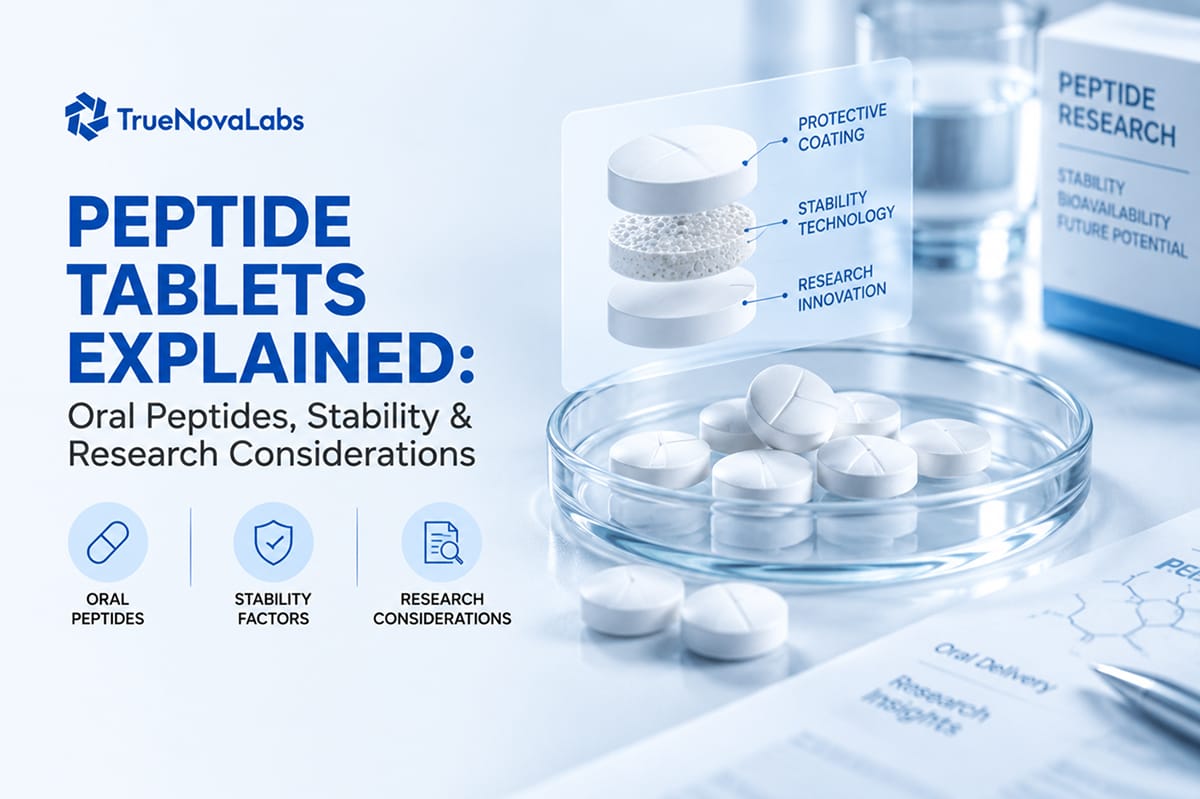
Peptide tablets have attracted growing interest in nutrition, biotechnology, and peptide research because they offer a convenient oral format for delivering peptide-based compounds. However, creating an effective peptide tablet involves complex scientific challenges, including peptide stability, digestion, absorption, and formulation design.
Unlike many small molecules, peptides are sensitive biological structures. Their activity depends on factors such as amino-acid sequence, molecular size, chemical stability, and how the body processes them after ingestion.
Therefore, researchers do not evaluate peptide tablets only by the amount of peptide they contain. Instead, they examine whether the formulation protects the peptide, maintains its structure, and supports reliable research outcomes.
👉 Explore research-focused peptide resources and learn more about current peptide science at True Nova Labs
This guide explains how peptide tablets work, how researchers approach oral peptide formulations, what affects peptide stability and bioavailability, and the current limitations in peptide tablet research.
What Are Peptide Tablets?
Peptide tablets are oral dosage forms that contain peptide-based ingredients compressed into a solid tablet format.
Unlike traditional small-molecule tablets, peptide tablets contain chains of amino acids that may be more sensitive to environmental conditions. Factors such as temperature, moisture, enzymes, and chemical reactions can influence peptide stability.
Peptide tablets may contain different types of peptide materials, including:
| Type | Description | Common Research Interest |
|---|---|---|
| Collagen peptides | Hydrolyzed collagen fragments | Nutrition and connective tissue research |
| Food-derived peptides | Peptides released from food proteins | Digestion and biological activity |
| Bioactive peptides | Peptide sequences with measurable activity | Cellular signaling research |
| Synthetic peptides | Laboratory-produced peptide sequences | Specific molecular pathways |
However, not every peptide can be easily converted into a tablet. Researchers must consider whether the peptide remains stable throughout manufacturing, storage, and digestion.
For this reason, formulation science plays an important role in determining whether an oral peptide product can maintain its intended characteristics.
👉 Learn more about performance and recovery peptides at SHOP ALL COMPOUNDS
How Are Peptides Formulated Into Oral Tablets?
Developing peptide tablets requires several formulation considerations.
Initially, manufacturers must select a suitable peptide ingredient. Next, they evaluate how the peptide behaves during processing and whether additional ingredients can protect its structure.
In many cases, common formulation components may include:
- binding agents
- stabilizers
- fillers
- protective coatings
- release-control materials
Moreover, these ingredients help maintain tablet structure and improve manufacturing consistency.
Moreover, researchers must consider peptide sensitivity during production. High temperatures, moisture exposure, or unsuitable chemical environments may affect peptide integrity.
For example, some peptides may require specialized processing conditions because their biological properties depend on maintaining a specific molecular structure.
Therefore, successful peptide tablet development involves balancing:
- peptide stability
- manufacturing conditions
- storage requirements
- release characteristics
- research objectives
What Happens to Peptides During Digestion?
Once administered orally, peptide tablets enter the gastrointestinal system, where they encounter several biological barriers.
The digestive process involves:
- Stomach acid exposure
- Enzyme breakdown
- Intestinal processing
- Potential absorption through intestinal pathways
During this process, digestive enzymes can break peptide chains into smaller fragments. Consequently, the peptide that reaches the intestine may differ from the original compound.
However, digestion does not always eliminate biological relevance. Some smaller peptide fragments may remain active or participate in absorption processes.
Researchers therefore study:
- peptide resistance to digestive enzymes
- intestinal transport mechanisms
- molecular changes during digestion
- resulting peptide fragments
For this reason, laboratory activity alone does not determine whether an oral peptide tablet produces the same effect in a biological system.
Why Is Peptide Stability Important in Oral Formulations?
Currently, peptide stability represents one of the biggest challenges in oral peptide development.
A peptide’s structure determines how it interacts with biological systems. Therefore, any structural change may influence its properties.
For this reason, several factors can affect peptide stability:
| Factor | Potential Impact |
|---|---|
| Temperature | May accelerate peptide degradation |
| Moisture | Can affect chemical stability |
| pH changes | May alter peptide structure |
| Oxidation | Can damage sensitive amino-acid residues |
| Storage time | May influence long-term quality |
Because of these challenges, researchers often evaluate peptide stability before studying biological activity.
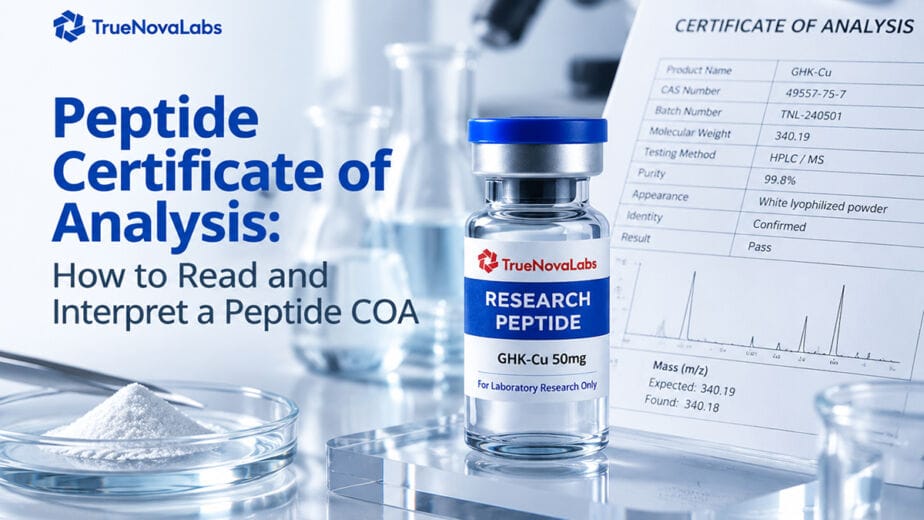
Analytical methods such as chromatography and mass spectrometry can help researchers examine:
- peptide identity
- purity
- degradation products
- molecular consistency
Moreover, proper storage conditions remain important for maintaining peptide quality throughout the product lifecycle.
👉 Explore the science behind supplement ingredients, research methods, and quality evaluation in Supplements: Science, Ingredients, Research & Quality Standards Explained.
What Factors Can Influence Peptide Bioavailability?
Generally, bioavailability describes how much of a compound becomes available for biological use after administration.
In particular, for peptide tablets, several factors may influence bioavailability.
Peptide Structure
Furthermore, a peptide’s amino-acid sequence and molecular size can affect digestion, transport, and stability.
Digestive Stability
Some peptides may break down quickly during digestion, while others may remain stable for longer periods.
Formulation Technology
Tablet composition can influence how quickly a peptide releases and interacts with the digestive environment.
Individual Biological Differences
Age, digestive function, metabolism, and other biological factors may influence peptide processing.
| Factor | Why It Matters |
|---|---|
| Molecular size | Influences digestion and transport |
| Sequence | Determines structural characteristics |
| Stability | Affects peptide survival |
| Tablet formulation | Controls release properties |
| Biological variation | Creates differences between individuals |
Therefore, researchers must evaluate peptide tablets through multiple approaches rather than relying on one measurement.
Peptide Tablets vs Other Peptide Formats
Meanwhile, peptides can appear in several different formats, and each format presents unique research considerations.
| Format | Advantages | Research Considerations |
|---|---|---|
| Tablets | Convenient oral format | Requires stability and absorption evaluation |
| Powders | Flexible formulation options | Stability after mixing may require assessment |
| Capsules | Easy administration | Depends on peptide protection technology |
| Liquid formulations | Potentially faster release | May face stability challenges |
| Laboratory preparations | Controlled experimental design | Requires analytical verification |
Peptide tablets provide convenience, but convenience does not automatically guarantee biological availability.
Similarly, compared with other formats, tablets require researchers to carefully balance protection, release, and stability.
👉 Learn more about performance and recovery peptides at SHOP ALL COMPOUNDS
What Are the Current Research Limitations?
Although peptide research continues to expand, several challenges remain.
Limited Human Evidence
For example, many peptide studies begin with laboratory or preclinical models. Therefore, researchers must carefully separate experimental findings from confirmed human outcomes.
Oral Delivery Challenges
The digestive system creates significant barriers for peptide absorption. Consequently, scientists continue to investigate better delivery methods.
Formulation Differences
Two peptide products may contain similar ingredients but perform differently because of variations in manufacturing, stability, and composition.
Regulatory Classification
In Canada, peptide products may fall under different regulatory categories depending on ingredients, claims, dosage form, and intended use.
Natural health products require appropriate authorization from Health Canada and typically carry a Natural Product Number (NPN).
Meanwhile, injectable peptides intended for therapeutic use may fall under prescription drug regulations.
Therefore, researchers and consumers should understand the difference between dietary peptide products and research compounds.
👉 Want to understand peptide supplements in more detail? Explore peptide categories, formulation, quality factors, and current research in Peptide Supplements: Types, Science, Quality & Research Explained.
FAQ About Peptide Tablets
Are peptide tablets the same as protein supplements?
No. Protein supplements usually contain larger protein molecules, while peptide tablets contain shorter chains of amino acids derived from proteins or produced synthetically.
Can peptides survive digestion?
Some peptides may remain partially stable during digestion, while others break down into smaller fragments. Researchers study this process to understand peptide availability.
Why is peptide stability important?
Stability helps maintain peptide structure, quality, and consistency during manufacturing, storage, and research evaluation.
Are peptide tablets widely studied?
Research continues to grow, but evidence varies depending on the peptide type, formulation, and intended application.
Are peptide tablets considered research peptides in Canada?
Not necessarily. Product classification depends on formulation, claims, ingredients, and intended use.
How do researchers evaluate peptide tablet quality?
Researchers may examine peptide identity, purity, molecular characteristics, stability, manufacturing consistency, and analytical testing results.
Conclusion
Peptide tablets represent an interesting area of research because they combine peptide science with oral delivery technology.
However, developing effective oral peptide formulations requires careful consideration of stability, digestion, bioavailability, and manufacturing quality.
Researchers continue to explore how peptide structure, formulation methods, and delivery systems influence peptide performance. At the same time, evidence remains highly dependent on the specific peptide, research model, and available human data.
For Canadian audiences, understanding the difference between dietary peptide products and research compounds is equally important. Ultimately, clear product classification, analytical documentation, and quality standards help support more reliable peptide research.
True Nova Labs focuses on research-oriented peptide education, compound information, analytical testing, and quality considerations to help readers better understand current peptide science.
👉 Explore educational resources and research-focused peptide information at TrueNovaLabs.
Disclaimer:
This content is provided by True Nova Labs for educational and research purposes only. It is not intended to diagnose, treat, cure, or prevent any disease, nor to provide medical or legal advice.



3 Comments
Daniel Wellington
I found the discussion of peptide tablets interesting, especially the point that formulation and delivery method can affect how peptide-based products are studied. Understanding these differences is useful when comparing oral products with other research formats.
Olivia Crawford
The topic of peptide tablets raises some interesting questions around stability, formulation, and bioavailability. I appreciate the practical research perspective and the emphasis on evaluating specific products rather than making broad assumptions about all peptide tablets.
Ethan Kensington
I liked the focus on the technical considerations behind peptide tablets. Factors such as formulation quality and compound stability are important details to consider when evaluating research involving oral peptide products.