
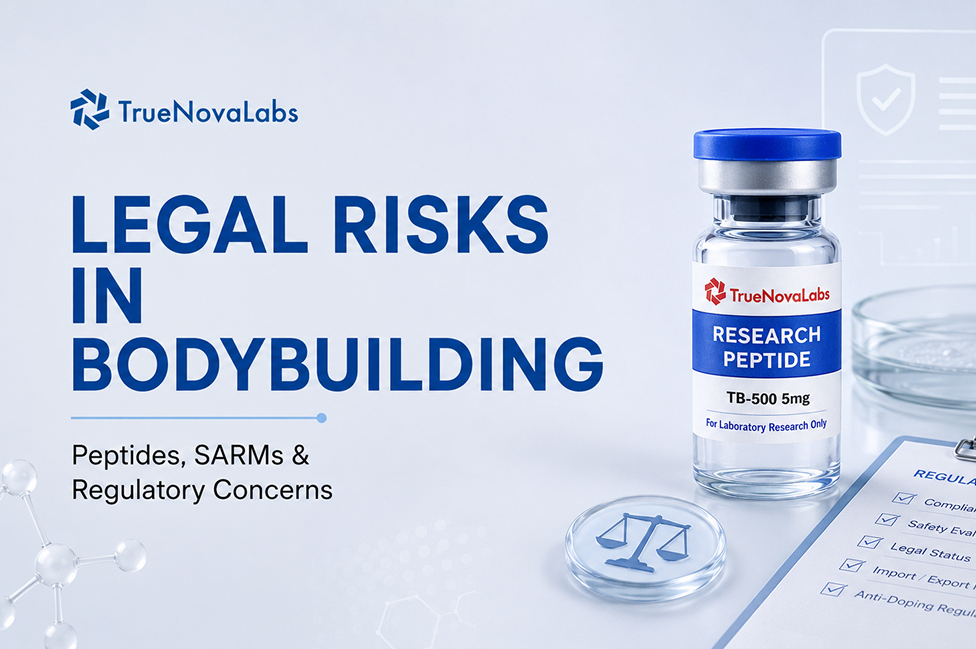
Bodybuilding has always been connected to discipline, training intensity, nutrition, and performance optimization. However, in recent years, the conversation has expanded beyond protein powders and workout programs into more complex areas such as peptides, SARMs, hormone-related compounds, and research-use-only products.
This shift has created a new layer of concern: legal risks in bodybuilding.
In Canada, marketers often promote many physique-enhancement, muscle-growth, fat-loss, or workout-support products even though they may contain hidden ingredients, unapproved drugs, or compounds that Health Canada has not reviewed for safety, efficacy, or quality. Health Canada warns that sellers often market bodybuilding products online or in stores as dietary supplements when they are not, and some products may contain hidden or unapproved drug ingredients.
For researchers, coaches, athletes, and informed buyers, understanding these risks is essential. At True Nova Labs, the focus is on responsible research education, compound transparency, and helping readers understand the difference between scientific research, regulatory compliance, and unsafe consumer use. Visit True Nova Labs to explore more research peptide resources and educational guides.
Why Legal Risks Exist in Bodybuilding
Legal risks in bodybuilding exist because many products in the performance and physique space sit at the intersection of several regulated areas: drugs, supplements, sports rules, advertising claims, importation, and personal use.
Marketers may label a product as a “supplement,” but that label does not automatically make it legal, safe, or approved. Health Canada specifically notes that some bodybuilding products may contain hidden ingredients or unapproved drugs that regulators have not reviewed for safety, efficacy, and quality.
These risks become more serious when products are promoted with claims related to:
- Muscle growth
- Fat loss
- Hormone optimization
- Recovery acceleration
- Strength enhancement
- Testosterone support
- Injury healing
- Performance improvement
From a regulatory perspective, these claims may move a product from a general wellness category into a drug-like category, especially when marketers present the product as affecting body structure, function, hormones, disease, or treatment outcomes.

Regulations Around Peptides and SARMs
Peptides and SARMs are often discussed together in bodybuilding communities, but they are very different categories.
SARMs and Canadian Regulation
SARMs, or Selective Androgen Receptor Modulators, are synthetic compounds designed to interact with androgen receptors. Online communities commonly discuss them for muscle growth, strength, and body composition. However, Health Canada has repeatedly warned about unauthorized workout products that are labelled to contain, or have been tested and found to contain, SARMs or other dangerous ingredients.
Health Canada states that unauthorized workout products may pose serious health risks, and the agency updates its public advisory tables when it identifies unauthorized health products promoted as workout aids.
This matters because sellers frequently market SARMs online as “research chemicals” or “supplement alternatives.” However, that positioning does not remove potential regulatory risk when they sell, promote, or use the products outside an appropriate legal framework.
Peptides and Canadian Regulation
Peptides are more complex because they are not one single legal category. Some peptides are approved medicines when prescribed and used in a regulated medical context. Others are experimental compounds, research materials, or non-approved products depending on the peptide, formulation, claim, and intended use.
In a bodybuilding context, legal risk often arises when sellers promote peptides with human-use claims, physique-enhancement claims, or treatment-style claims. Even if a product carries a “research use only” label, marketers may still create risk when they imply personal use, athletic performance enhancement, disease treatment, or guaranteed biological outcomes.
Because peptide regulation depends heavily on compound identity and intended use, responsible businesses and researchers should avoid broad claims such as “legal in Canada,” “safe for bodybuilding,” or “approved for performance” without clear regulatory support.
👉 Learn more about performance and recovery peptides at SHOP ALL COMPOUNDS
Sports Bans and Competitive Risks
For competitive athletes, the legal and professional risks go beyond national product regulations. Anti-doping rules can apply even when a product is purchased legally, used unknowingly, or labelled incorrectly.
The World Anti-Doping Agency, or WADA, maintains the Prohibited List used across many sports systems worldwide. WADA’s prohibited categories include anabolic agents, peptide hormones, growth factors, related substances, and hormone/metabolic modulators.
This matters because SARMs are generally treated as prohibited substances in sport, and many peptide-related substances may also fall under prohibited categories depending on their mechanism and classification.
For Canadian athletes, Sport Integrity Canada emphasizes that athletes are responsible for any prohibited substance found in their sample. It also warns that supplement use carries significant risk because supplements may contain prohibited substances due to contamination, poor regulation, or inaccurate labelling.
Competitive risks may include:
- Failed drug tests
- Suspensions
- Loss of medals or rankings
- Loss of sponsorships
- Damage to reputation
- Long-term career consequences
- Unintentional doping violations
The key issue is that “I did not know” is usually not enough protection in competitive sport. Athletes are responsible for what enters their body.

Health and Safety Liability Concerns
Legal risks in bodybuilding are closely connected to health and safety risks. When a product causes harm, the consequences may involve more than personal health. They can also involve liability for sellers, distributors, coaches, influencers, gyms, and brands.
Health Canada has warned that unauthorized workout products may pose serious health risks when they contain dangerous ingredients or unapproved drugs. The agency also notes that bodybuilding products may contain harmful hidden ingredients and unapproved drugs that have not been reviewed for safety, efficacy, or quality.
Safety-related legal risks may involve:
- Mislabelled products
- Contaminated products
- Incorrect purity or dosage information
- Hidden pharmaceutical ingredients
- Unsafe injection practices
- Unsupported medical claims
- Adverse event responsibility
- Consumer protection issues
Injectable products create additional concerns. Health Canada has warned in enforcement actions that injectable unauthorized drugs can carry additional risks, including infections, allergic reactions, contamination, improper handling, and unsafe administration.
For businesses, this means marketing language matters. Unsupported claims such as “heals injuries,” “burns fat fast,” “boosts testosterone,” “builds muscle safely,” or “guaranteed results” can create regulatory and liability exposure, especially if they imply unauthorized drug use.
👉 Learn more about performance and recovery peptides at SHOP ALL COMPOUNDS
Research-Only vs Personal Use Discussions
One of the most confusing areas in bodybuilding is the phrase “research use only.”
In legitimate scientific contexts, researchers use research-use-only compounds in controlled laboratory or experimental research settings. They do not position them as consumer supplements, prescription substitutes, or personal performance products.
However, sellers in bodybuilding spaces sometimes misuse the phrase as a marketing shield. They may label a product “research use only” while using the website, influencer content, product descriptions, or customer discussions to suggest personal bodybuilding use. That gap between the label and the marketing intent can create regulatory risk.
Research-use-only positioning should avoid:
- Human dosing instructions
- Cycle recommendations
- Personal transformation claims
- Before-and-after claims
- Athletic performance promises
- Medical treatment claims
- Injury-healing claims
- “Safe alternative” language
- Claims of guaranteed fat loss or muscle gain
A responsible research-focused approach should emphasize compound identity, testing standards, analytical transparency, and intended research context. This is especially important for peptide-related products, where the legal status may depend on the exact compound, product claim, formulation, and distribution context.
At True Nova Labs, educational content is designed to help readers understand research context, not to encourage misuse or unsafe personal experimentation.
Advertising, Importation, and Seller Risks
Legal risks in bodybuilding do not only apply to people using products. They also apply to businesses selling, advertising, importing, or distributing them.
A brand may face risk if it:
- Sells unauthorized health products
- Uses performance-enhancement claims
- Markets research products for personal use
- Promotes products as safe without evidence
- Uses misleading supplement labels
- Imports restricted or unauthorized compounds
- Fails to provide accurate product information
- Allows affiliates or influencers to make non-compliant claims
Health Canada regularly issues public advisories involving unauthorized health products, including workout-related products that may pose serious risks. This means enforcement risk is not theoretical. It is an active concern in the Canadian market.
For companies operating in the bodybuilding, peptide, or research compound space, compliance should not be an afterthought. It should be part of the content strategy, product positioning, quality control, and customer education process.
Staying Informed About Regulations
Regulations around bodybuilding compounds can change, and enforcement priorities may shift over time. This is why researchers, businesses, athletes, and consumers should avoid relying only on forum discussions, influencer claims, or outdated online articles.
Reliable sources to monitor include:
- Health Canada public advisories
- Government of Canada health product safety pages
- Sport Integrity Canada supplement guidance
- WADA Prohibited List updates
- Global DRO for athlete medication and substance checks
- Peer-reviewed research when available
- Qualified legal or healthcare professionals when needed
Sport Integrity Canada warns that athletes are responsible for prohibited substances found in their samples. It also warns that supplement use carries risk because products may contain prohibited substances. This is especially important for bodybuilders competing in tested federations or athletes subject to anti-doping rules.
Staying informed is not only about avoiding penalties. It is also about making responsible decisions, protecting health, and understanding the difference between legitimate research and unsafe consumer marketing.
Read Peptides for Bodybuilding: Muscle Growth, Recovery & Performance Explained to learn more about muscle growth, recovery, performance potential, and safety considerations.
FAQ – Legal Risks in Bodybuilding
Are SARMs legal in Canada?
SARMs are a high-risk category in Canada. Health Canada has warned about unauthorized workout products labelled to contain or tested and found to contain SARMs and other dangerous ingredients. These products may pose serious health risks and may not be authorized for sale.
Are peptides legal in Canada?
It depends on the specific peptide, formulation, claims, and intended use. Some peptides may be regulated as prescription drugs, while others may be used in research contexts. Broad claims such as “all peptides are legal” are inaccurate and should be avoided.
What are the biggest legal risks in bodybuilding?
The biggest risks include unauthorized health products, misleading supplement labels, hidden drug ingredients, unsupported performance claims, unsafe personal use, importation issues, and anti-doping violations.
Can “research use only” products be used personally?
Research-use-only products are not intended for personal use. If sellers market a product as research-only while promoting bodybuilding, dosing, performance, or transformation claims, they may create regulatory and safety concerns.
Are SARMs banned in sport?
Yes. SARMs are generally prohibited under anti-doping rules because they fall under performance-enhancing substance categories. Athletes should always check current WADA and Sport Integrity Canada guidance before using any supplement or compound.
Can supplements cause failed drug tests?
Yes. Sport Integrity Canada warns that athletes remain responsible for any prohibited substance found in their sample. Supplement use also carries risk because contamination or poor labelling may cause products to contain prohibited substances.
What should buyers look for in research peptide suppliers?
Research buyers should look for clear compound identity, batch-specific testing, third-party analysis, certificates of analysis, transparent sourcing, research-use-only positioning, and no unsupported human-use or performance claims.
Why is Health Canada concerned about bodybuilding products?
Health Canada warns that many bodybuilding products sold online and in stores use dietary supplement marketing, even though they may contain hidden ingredients or unapproved drugs that regulators have not reviewed for safety, efficacy, or quality.
Final Thoughts
The legal risks in bodybuilding are becoming more important as peptides, SARMs, research chemicals, and hormone-related compounds become more visible online. The biggest risk is not only the compound itself, but the gap between how products are labelled, how they are marketed, and how they are actually used.
In Canada, Health Canada warns that many bodybuilding products sold online or in stores may be unauthorized, mislabelled, or contain hidden drug ingredients that regulators have not reviewed for safety, efficacy, or quality. For athletes, anti-doping rules add another layer of risk because athletes usually carry responsibility, even when contamination or mislabelling occurs.
The safest and most responsible approach is to stay informed, avoid unsupported claims, understand regulatory boundaries, and separate legitimate research education from personal-use hype.
Disclaimer:
This content is provided by True Nova Labs for educational and research purposes only. It is not intended to diagnose, treat, cure, or prevent any disease, nor to provide medical or legal advice.



3 Comments
Michael Turner
This was a really insightful read. A lot of people focus on the physical risks of bodybuilding compounds, but the legal consequences often get overlooked. I think more athletes should understand how regulations can differ between countries before purchasing or using anything.
Daniel Foster
Great article and a topic that deserves more attention. The section explaining how possession, importation, and distribution can carry different legal implications was especially interesting. Have you noticed any major regulatory changes in Canada recently regarding performance-enhancing substances?
Jason Reynolds
I appreciate how balanced this article is. Many discussions around bodybuilding compounds focus only on potential benefits, while this piece does a good job highlighting the legal risks that can have long-term consequences. It would be interesting to see a follow-up article comparing regulations across different countries.