

Recovery and healing are critical components of both athletic performance and general wellness. Researchers study peptides for recovery and healing to understand how they may support muscle repair, tissue regeneration, and adaptation after stress. Unlike direct performance enhancers, these compounds are evaluated for their role in supporting the biological environment that facilitates recovery and regeneration.
In Canada, researchers primarily supply peptides discussed in this context for laboratory and educational research purposes. Therefore, they are not approved as therapeutic or performance-enhancing products.
👉 Explore research-grade peptides with verified purity and transparent sourcing at True Nova Labs
This guide provides an overview of how recovery and healing peptides work, which compounds researchers most commonly reference, and what factors influence their effectiveness. In addition, it highlights key considerations for interpreting research findings within a controlled, scientific context.
How Recovery and Healing Peptides Work
Recovery and healing peptides are biologically active molecules studied for their influence on several key processes, including:
- Growth hormone and IGF-1 signaling
- Cellular repair pathways
- Tissue regeneration
- Inflammation and recovery responses
These compounds do not directly “heal” tissue but researchers explore how they may enhance the processes the body naturally uses to recover after exercise, injury, or stress. Studies often focus on supporting recovery efficiency and adaptation, particularly under repeated physical stress.
👉 Learn more about performance and recovery peptides at SHOP ALL COMPOUNDS
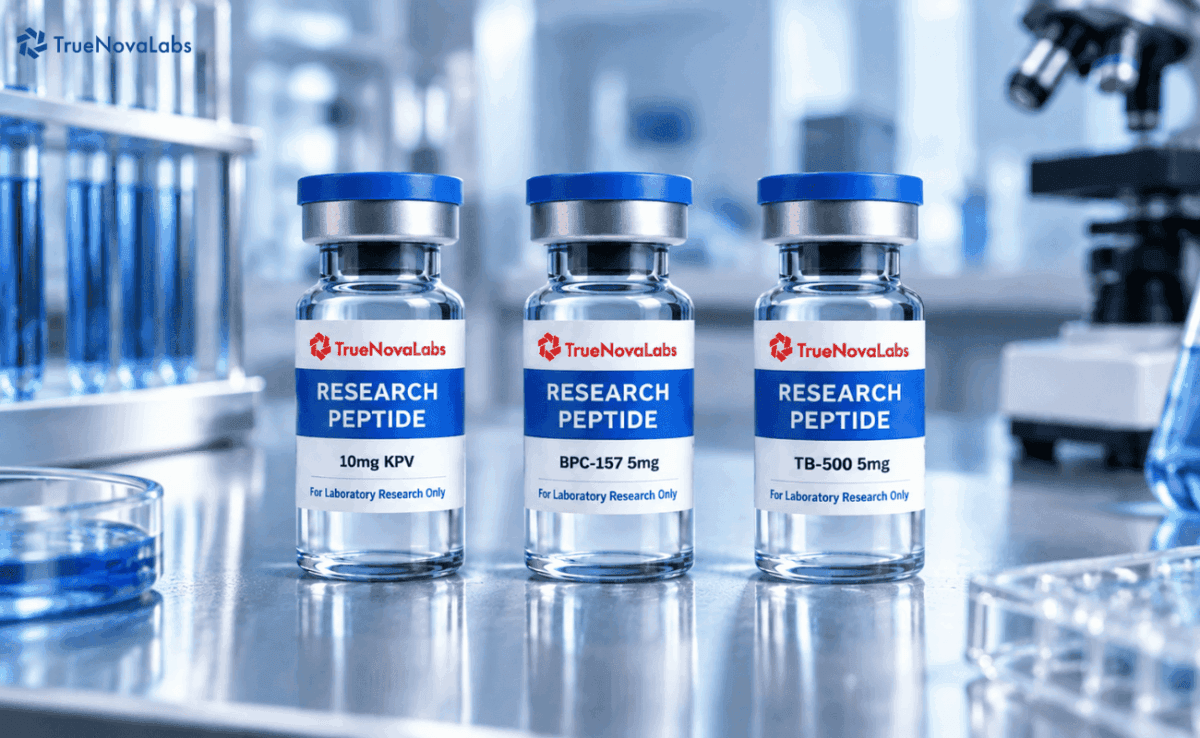
Popular Peptides Used for Recovery Support
Researchers commonly reference several peptides for their recovery and healing properties:
| Peptide | Primary Research Focus | Recovery Context |
|---|---|---|
| BPC-157 | Tissue repair | Supports muscle, tendon, ligament regeneration |
| TB-500 (Thymosin Beta-4) | Cell migration and repair | Studied in muscle and connective tissue recovery |
| CJC-1295 | GH pathway modulation | Sustained growth hormone signaling for recovery |
| Ipamorelin | GH secretagogue | Pulsatile GH release supporting repair mechanisms |
Researchers often combine these peptides to study their synergistic effects on recovery pathways.
Benefits for Muscle, Joint & Tissue Repair
From a research perspective, peptides for recovery and healing may influence:
| Benefit | Research Focus |
|---|---|
| Muscle repair | Cellular regeneration and protein synthesis |
| Joint and tendon recovery | Tissue repair and collagen synthesis |
| Recovery efficiency | Adaptation to repeated stress or training |
| Growth hormone signaling | Endocrine pathways related to repair and adaptation |
These effects are not immediate and depend on multiple factors including biological variability, peptide quality, and research context.
👉 Learn more about performance and recovery peptides at SHOP ALL COMPOUNDS
Recovery Timelines and Expected Results
In research discussions, recovery timelines vary based on peptide type, biological system, and training or stress level. Generally:
- Initial cellular repair processes may be supported within days
- Tissue remodeling and adaptation may take weeks to months
- Recovery peptides are studied as part of ongoing adaptation, not as single-use interventions
It is critical to manage expectations—peptides facilitate biological processes rather than provide instant results.
Risks, Side Effects & Safety Considerations
Potential concerns with recovery and healing peptides in research include:
- Variability in biological response
- Altered hormonal signaling
- Degradation due to improper storage
- Contamination or inconsistent handling
Many risks relate to product quality, storage, and handling rather than the peptide’s mechanism itself.
| Quality Factor | Importance |
|---|---|
| Purity verification | Ensures consistent and reliable outcomes |
| Storage conditions | Maintains stability and activity |
| Handling procedures | Reduces contamination risks |
| Supplier transparency | Supports reproducibility in research |
In Canada, Health Canada regulates substances according to their classification and intended use, emphasizing responsible use in research settings.
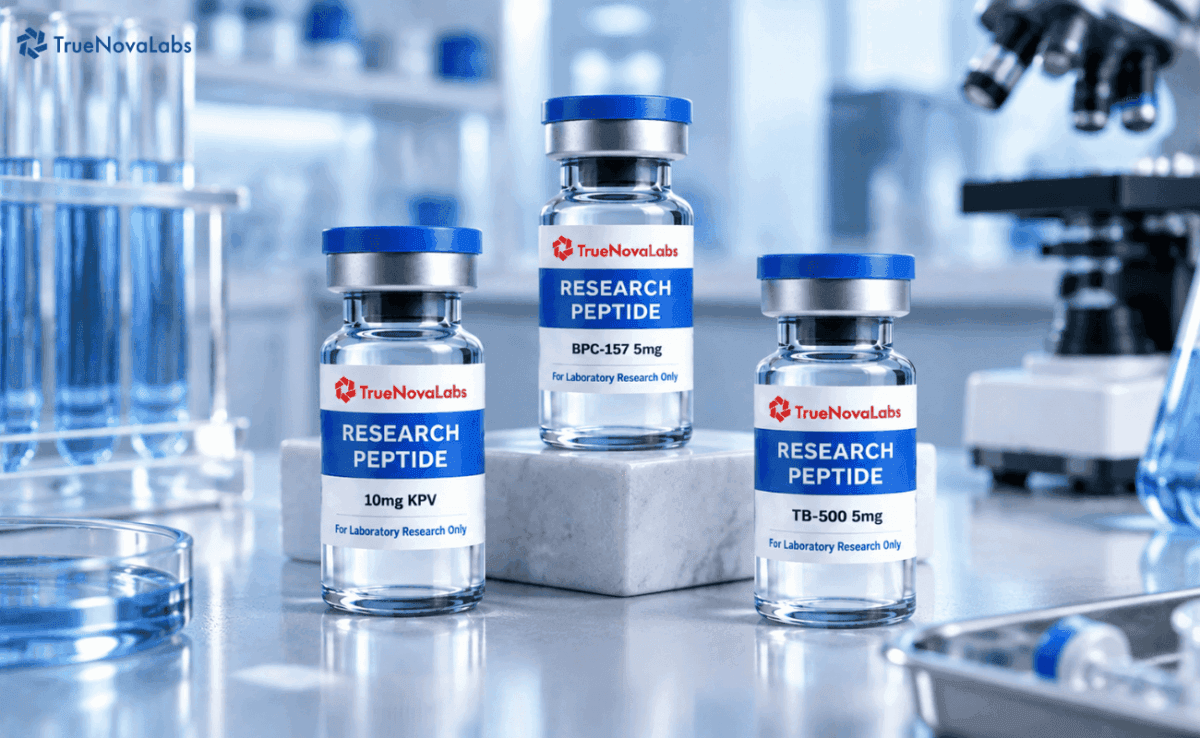
Who Commonly Uses Healing Peptides?
Recovery and healing peptides are commonly studied by:
- Researchers focusing on muscle adaptation and tissue repair
- Sports scientists investigating recovery optimization
- Laboratory studies examining connective tissue and endocrine signaling
Researchers use them for research and experimental purposes rather than for casual supplementation.
MORE:
- Peptides for Joint Pain: Recovery Support, Benefits & What to Know
- Injury Recovery Timeline: How Long Healing Peptides May Take to Work
- Are Healing Peptides Safe? Risks, Side Effects & Safety Considerations
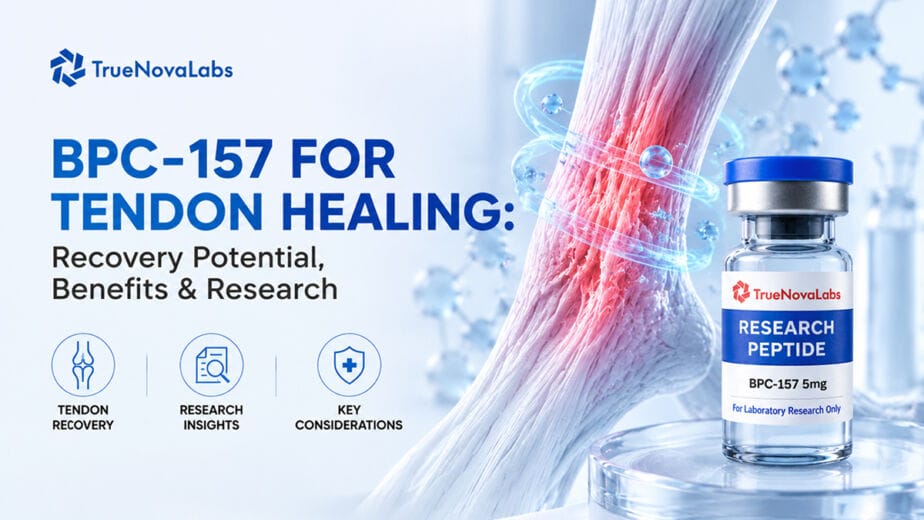
- BPC-157 for Tendon Healing: Recovery Potential, Benefits & Research
- TB-500 vs BPC-157: Differences, Recovery Benefits & Healing Potential
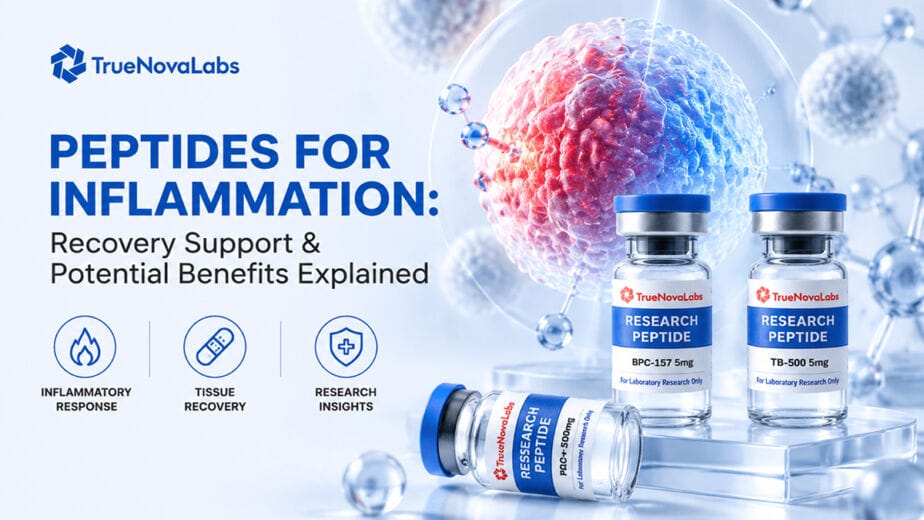
- Peptides for Inflammation: Recovery Support & Potential Benefits Explained
- Recovery Peptides After Surgery: Healing Support & Recovery Expectations
- Healing Peptides Research: Current Studies, Recovery Science & Future Potential
FAQ – Peptides for Recovery & Healing
What are peptides for recovery & healing?
They are compounds studied for how they may support recovery, tissue repair, and adaptation in muscles, joints, and connective tissue. In other words, researchers examine them to better understand how these biological processes respond to stress, injury, or training.
Do these peptides directly heal injuries?
No. Instead, they are studied for their role in supporting the biological systems that facilitate repair and regeneration.
Which peptides are most commonly used?
Researchers frequently reference BPC-157, TB-500, CJC-1295, and Ipamorelin in recovery research.
Are recovery peptides approved in Canada?
Regulators classify most of these compounds as research compounds, and pharmaceutical frameworks must regulate them before they qualify as approved therapeutic products.
Conclusion
Peptides for recovery & healing are primarily studied for their ability to support muscle repair, tissue regeneration, and recovery efficiency. While they do not directly heal or build tissue, they are valuable tools in research to understand how biological systems respond to stress and repair.
Reliable research outcomes depend on:
- Verified peptide quality
- Proper storage and handling
- Integration with training and recovery protocols
- Realistic expectations
Explore Research-Grade Peptides
For researchers seeking reliable compounds, looking for peptides with verified purity, transparent sourcing, and consistent quality standards is essential for ensuring accurate and reproducible results.
👉 Explore the full collection at TrueNovaLabs: SHOP ALL COMPOUNDS
Disclaimer:
This content is provided by True Nova Labs for educational and research purposes only. It is not intended to diagnose, treat, cure, or prevent any disease, nor to provide medical or legal advice.



3 Comments
Alex Morgan
I found the discussion around peptides and recovery research quite interesting, particularly the focus on how different compounds are being investigated in relation to tissue and cellular processes. The distinction between early research findings and established clinical evidence is an important point when exploring this topic.
Emily Dawson
This article provides a useful overview of why peptides have attracted interest in recovery-related research. I appreciate the research-focused perspective, especially the emphasis on understanding biological mechanisms while recognizing that more evidence may be needed before drawing firm conclusions.
Ryan Fletcher
I liked the balanced approach to discussing peptides in the context of recovery and healing research. Looking at the proposed mechanisms alongside the current evidence and research limitations gives a more realistic perspective on what these studies can currently tell us.